Don't Make These 5 Common Mistakes When Applying for Studying in Germany
Planning on studying in Germany? Avoid these 5 common student visa mistakes. Our guide covers finances, language, and document pitfalls to ensure your application is successful.

Germany's world-class, tuition-free universities make it one of the most competitive study destinations for international students. You've found your dream course, practised your German, and you're ready to apply. Then it happens - a visa rejection letter. The path to studying in Germany is paved with precise paperwork, and the visa application is the final, most critical hurdle. Rejection is heartbreaking - especially when it comes down to a common, entirely avoidable mistake. Here are the five most frequent pitfalls and exactly how to avoid them.
Mistake 1: Underestimating the Blocked Account (Sperrkonto)#
This is, without question, the number one reason for student visa rejections from Sri Lanka.
The Mistake
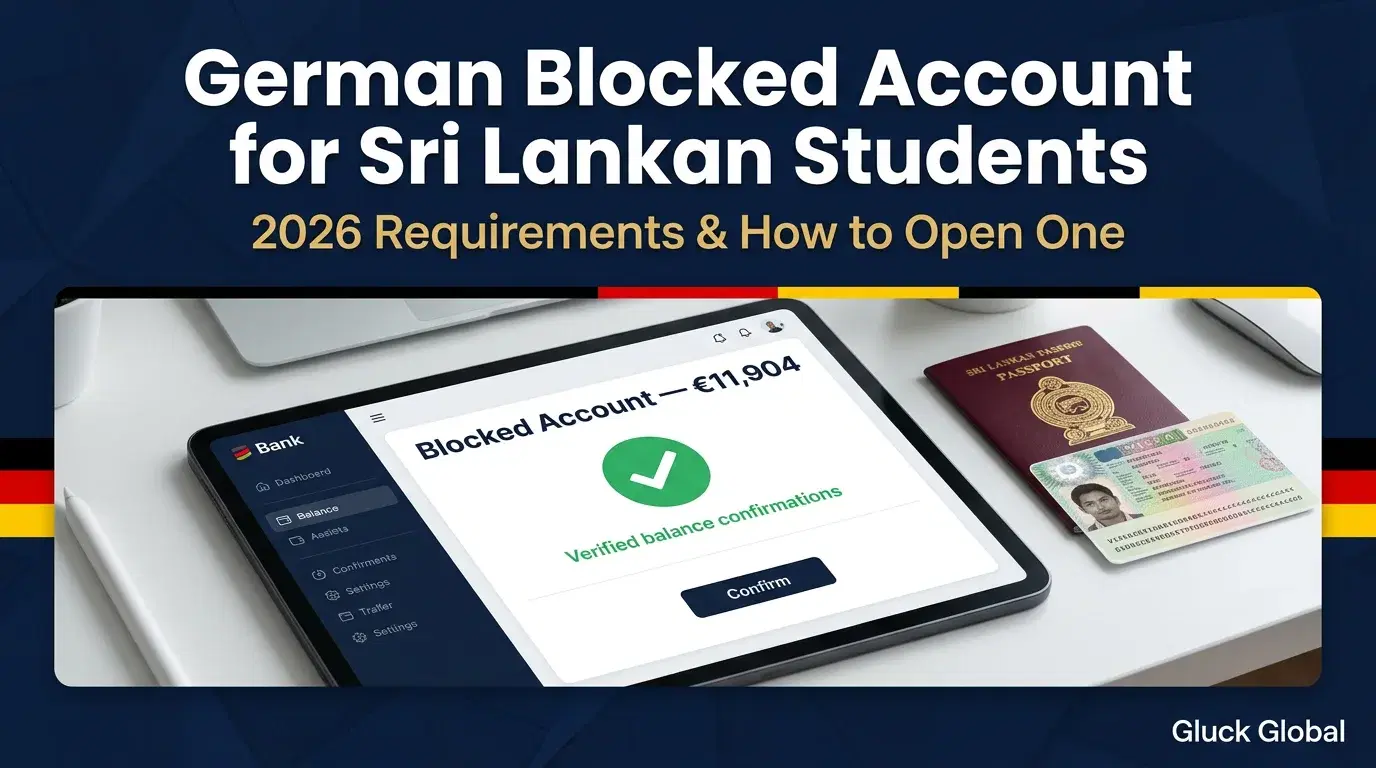
Applicants often deposit the wrong amount - the German government updates the required figure annually and the 2026 requirement is €11,904 (€992/month). Others use an unapproved bank, or simply start the process too late. A standard bank statement from a Sri Lankan bank is not sufficient. The blocked account must be with an approved German provider.
The Solution
Start your Sperrkonto the moment you receive your university admission letter - the process can take several weeks. Use an approved provider such as Fintiba or Expatrio. Glück Global guides you through the entire setup, ensuring you use the correct provider, deposit the right amount, and have the account confirmed well before your visa appointment.
Mistake 2: The Language Gap for Studying in Germany#
Germany offers many English-taught Master's programmes - but this creates a widespread and costly misunderstanding.
The Mistake
Students either assume their English-taught course requires no German knowledge at all, or they underestimate the level required for German-taught programmes. Arriving at the embassy with an A2 certificate for a course that clearly specifies B2 or C1 proficiency is a guaranteed rejection. Even for English-taught programmes, the visa officer may probe your German language awareness.
The Solution
Check the exact language requirement for your specific course and university - not the general requirement, the specific one. If your course requires B1 or B2, you need genuine fluency, not just a certificate obtained at the last minute. Glück Global's German language programme teaches you to B2 fluency through live sessions, AI chatbot practice available 24/7, and targeted preparation for the exact exam format - Goethe, telc, or ÖSD - required for your visa.
Mistake 3: A Weak or Generic Letter of Motivation#
The Motivationsschreiben is your only opportunity to speak directly to the visa officer and prove genuine student intent.
The Mistake
Many applicants submit a copy-pasted, generic letter. Phrases like “I have always been fascinated by Germany” or “I want to study at a top university” say nothing specific and prove nothing. Visa officers read hundreds of these. A generic letter signals that you have not thought seriously about your application - and raises doubts about your intent.
The Solution
Your letter must answer three questions with complete specificity: Why this course? Why this university? How does it connect to your career plan? Glück Global's academic consultants work with you to select the right institution and then help you craft a compelling, authentic letter that highlights your individual strengths and academic goals in the way German universities and visa officers expect.
Mistake 4: Incomplete or Incorrect Documentation#
German bureaucracy demands precision - and your visa application is held to the same standard as any other official process in Germany.
The Mistake
A single missing document can derail your entire application. The most common errors include:
- Missing apostilles or legalisation on academic certificates
- Uncertified translations of transcripts and birth certificates
- Incorrect or insufficient health insurance documentation
- Outdated or mismatched information across different forms
- Documents submitted in Sinhala or Tamil without a court-certified German translation
The Solution
Treat your application like a final exam - create a checklist of every required document and verify each one against the embassy's current requirements before submission. Glück Global assists with your complete documentation package: legalising transcripts, coordinating apostilles through the Sri Lankan Ministry of Foreign Affairs, arranging certified translations, and organising your full file to German embassy standards.
Mistake 5: Being Unprepared for the Visa Interview#
After weeks of gathering paperwork, you finally face the visa officer. This is not the moment to be underprepared.
The Mistake
The officer asks a straightforward question - “Why did you choose this university?” - and the applicant panics, gives a vague answer, or worse, answers in a way that directly contradicts their letter of motivation. Inconsistencies between your written application and verbal answers are one of the most common triggers for rejection.
The Solution
Know your application inside and out before your appointment. Re-read your letter of motivation until you can summarise every key point confidently. Practise answering common visa interview questions with someone who can give you honest feedback. Because Glück Global's language courses focus on real conversation - not just grammar - and our consultants have prepared you on your application, you will walk into that interview with genuine confidence, not just rehearsed answers.
Additional Tips for a Successful Application#
- ** Start at least 9–12 months before your intended semester ** - the blocked account, language exam, apostille process, and embassy appointment wait all take longer than most students expect
- ** Read the embassy checklist for Sri Lankan nationals specifically ** - not the generic international student checklist
- Keep digital and physical copies of everything - missing a single document on appointment day means rebooking, which can delay your start by months
- Practice speaking German before the interview - even for English-taught programmes, showing basic German awareness makes a positive impression
- Stay consistent - your motivation letter, interview answers, and course choice must all align into a single, credible story
Why Students Choose Glück Global#
- 57+ university admissions secured with a high visa success rate for Sri Lankan students
- End-to-end support - language training, university applications, blocked account, documentation, and visa preparation in one place
- AI-enhanced German learning - 24/7 chatbot practice plus live sessions with experienced instructors in Sinhala, Tamil, and English
- Transparent timelines - we give you realistic schedules and regular updates, not vague promises
- Academic consultants who know German university admissions requirements and help you apply strategically
The German student visa process is a marathon, not a sprint. With the right preparation and the right team, a rejection is not inevitable - it is avoidable. Contact Glück Global for a free consultation →
Frequently Asked Questions#
What is the most common reason Sri Lankan students get rejected for
a German student visa?
The blocked account (Sperrkonto) is the most frequent cause of rejection - either the wrong amount is deposited, an unapproved provider is used, or the account is not set up in time. The 2026 requirement is €11,904. Always use an approved provider like Fintiba or Expatrio and start the process immediately after receiving your admission letter.
Do I need German language skills if my programme is taught in
English?
Your university may not require German for an English-taught programme - but your daily life in Germany will. Even A2–B1 German makes doctor visits, government offices, housing contracts, and part-time job searches significantly easier. Glück Global recommends starting German language training regardless of your programme language.
How far in advance should I start my German student visa
application?
At least 9–12 months before your intended semester start date. This accounts for language exam preparation, blocked account setup, document apostille, the embassy appointment wait, and visa processing time. Starting late is the second most common reason for delays and rejections.