Essential Services for Newcomers in Germany: A Complete Guide for a Smooth Start
A complete guide to essential services in Germany - address registration, health insurance, banking, housing, transport, and career support for Sri Lankans and international newcomers in 2026.

Moving to Germany is an exciting milestone - but the first few weeks can feel overwhelming if you don't know where to start. Understanding the essential services in Germany and setting them up in the right order will make your transition dramatically smoother. From registering your address on day one to opening a bank account, getting health insurance, and finding your feet in daily life - this guide covers everything you need to know.
1. Register Your Address - Do This First#
The single most important task after arriving in Germany is registering your address at the local registration office, known as the Einwohnermeldeamt or Bürgeramt. This process is called Anmeldung and is legally required within 14 days of moving into your accommodation.
Without Anmeldung, almost nothing else is possible - your entire access to essential services in Germany depends on it:
- Opening a German bank account
- Signing a mobile phone contract
- Applying for your residence permit
- Registering with a doctor and accessing healthcare
- Starting employment or receiving your salary
You will need your passport, your rental contract (or a confirmation letter from your landlord), and a completed registration form. Most cities allow you to book appointments online via the city's official website. After registration you receive a Meldebescheinigung(registration certificate) - keep this document safe as it is required again and again.
2. Health Insurance#
Mandatory from Day One Germany has one of the best healthcare systems in the world, but it is not free by default - you must be insured. Health insurance is legally mandatory for everyone living in Germany.
| Type | Who It Is For | Monthly Cost (approx.) |
|---|---|---|
| Public (gesetzliche) insurance | Students, employees earning below threshold | €110–€130 (students); employer-split for workers |
| Private (private) insurance | High earners, self-employed, some professionals | Varies - often €300–€700+ |
For most newcomers, the public insurance providers -TK (Techniker Krankenkasse), AOK, or DAK - are the simplest starting point. Register with a Hausarzt (GP) as soon as possible. For emergencies, call 112.
3. Open a German Bank Account#
A German bank account is essential for receiving your salary, paying rent via SEPA transfer, and setting up utility contracts. Most landlords and employers require a German IBAN.
- N26 and DKB are popular online banks that open accounts fully digitally - ideal for newcomers who haven't yet registered their address
- Commerzbank and Deutsche Bank offer in-branch accounts with English-speaking support in larger cities
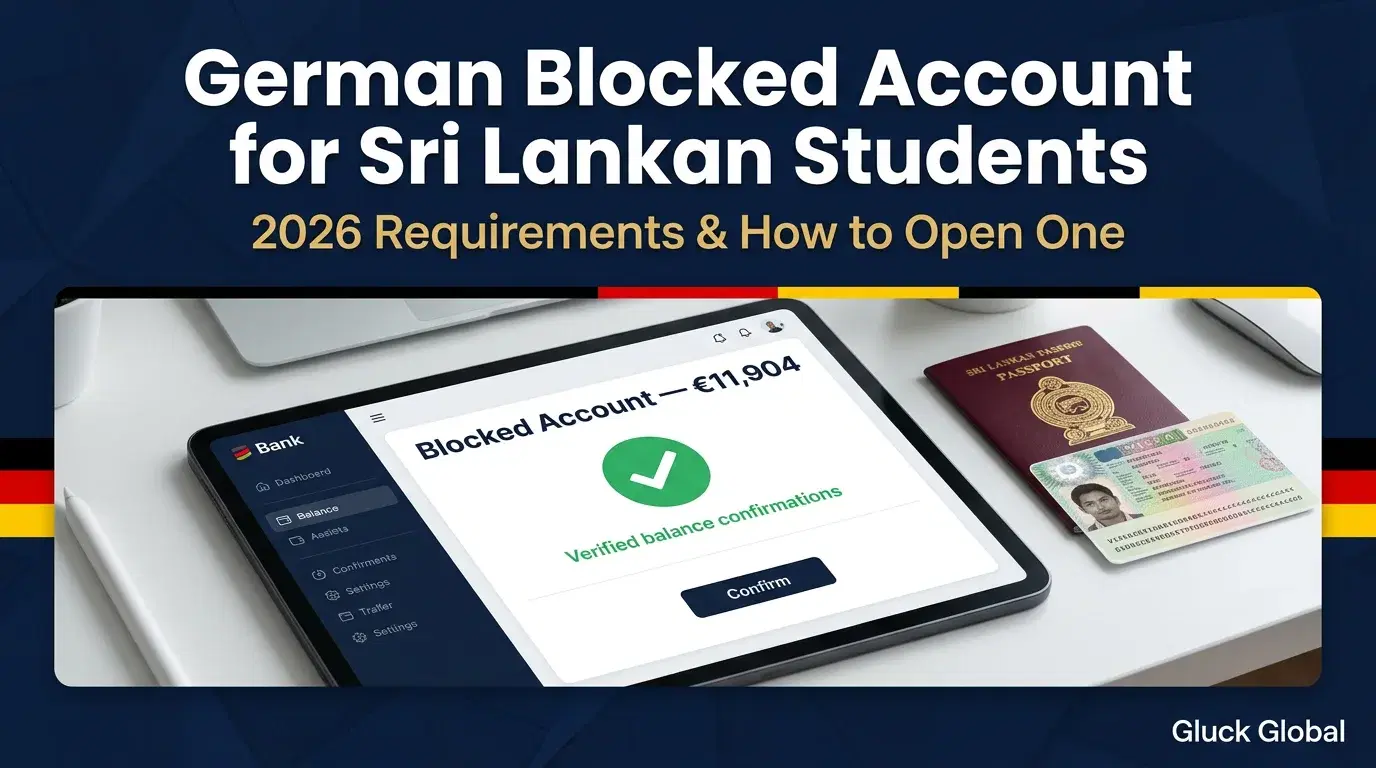
- Blocked account (Sperrkonto) - if you are on a student visa, you likely already have one via Fintiba or Expatrio; this is separate from your everyday account
4. Housing and Utilities#
Germany's housing market is competitive, especially in Munich, Berlin, Hamburg, and Frankfurt. Most apartments are rented unfurnished and require a deposit of up to three months' rent.
What to Know About Renting
- Read your Mietvertrag (rental contract) carefully - notice periods are typically 3 months
- Utilities (electricity, water, heating) are usually not included in the rent and must be set up separately
- Internet and mobile plans are widely available - providers like Telekom, Vodafone, and O2 offer prepaid and contract options
Shared Accommodation (WG)
A Wohngemeinschaft (WG) - a shared flat - is the most affordable and practical option for most newcomers, especially students. Platforms like WG-Gesucht.de and ImmobilienScout24 are the most widely used for finding rooms and apartments.
5. Public Transport#
Germany's public transport network is one of the best in Europe. Most cities have integrated systems covering U-Bahn (underground), S-Bahn (suburban rail), trams, and buses.
- Deutschlandticket (€58/month in 2026) - a nationwide flat-rate monthly ticket valid on all regional and local transport across Germany; an incredible value for newcomers
- Students often receive a Semesterticket through their university covering local transport for a semester
- Bike-sharing schemes (e.g. NEXTBIKE, DB Rad) are available in most cities and integrate with public transport apps
6. Free Essential Services in Germany Worth Knowing#
Several valuable essential services in Germany are either free or heavily subsidised for newcomers:
- Public universities - most charge no tuition fees for international students (semester contribution only: ~€300)
- Public libraries - free access to books, computers, study spaces, digital resources, and language learning tools
- Children's and maternity healthcare - vaccinations, prenatal care, and child health checks are fully covered by public insurance
- Integration courses - subsidised German language courses offered by the BAMF (Federal Office for Migration and Refugees) for those with a residence permit
- Counselling and social services - cities offer free mental health, legal aid, and integration counselling in multiple languages
7. Employment and Career Services#
Whether you are on a work visa or just arrived with a job offer, knowing Germany's employment support system helps you settle professionally faster.
- Agentur für Arbeit (Federal Employment Agency) - provides job listings, career counselling, and CV workshops. Also handles unemployment benefit registration if needed
- Qualification recognition - if you work in a regulated profession (healthcare, teaching, engineering), your foreign qualification needs formal recognition via the Anerkennungsprozess. Start this process before you arrive if possible
- MAKE IT IN GERMANY portal - the German government's official platform for international skilled workers with job listings, visa information, and city guides
8. Learning German - The Most Important Service You Can Give#
Yourself
No matter which of the essential services in Germany you access, speaking German will make every single interaction faster, easier, and more successful. From navigating a government office to building friendships and advancing your career - language is the foundation of integration.
At Glück Global, we offer live online German classes from A1 to B2 taught in Sinhala, Tamil, and English - designed specifically for Sri Lankans and South Asians moving to Germany. Start learning before you arrive so you hit the ground running. Explore our German Language Programme →
Newcomer Checklist: First 30 Days in Germany#
- ✓ Register your address (Anmeldung) - within 14 days
- ✓ Set up health insurance
- ✓ Open a German bank account
- ✓ Apply for residence permit at the Ausländerbehörde
- ✓ Get a SIM card / mobile number
- ✓ Set up utilities (electricity, internet)
- ✓ Buy a Deutschlandticket for transport
- ✓ Register with a GP (Hausarzt)
- ✓ Start or continue German language classes
Need personalised guidance for your move to Germany? Contact the Glück Global team →
Frequently Asked Questions#
What is the first thing to do after arriving in Germany?
Register your address (Anmeldung) at the local Bürgeramt within 14 days of arrival. Everything else - bank account, health insurance, residence permit - depends on having this done first.
Is health insurance mandatory in Germany?
Yes. Health insurance is legally required for all residents in Germany. Students can access public insurance at reduced rates; employees are typically covered through their employer with shared contributions.
Can I use English to access services in Germany?
In larger cities and universities, English is widely understood. However, most official government processes, contracts, and documents are in German. Learning at least basic German (A2–B1) significantly reduces frustration and errors when accessing essential services.