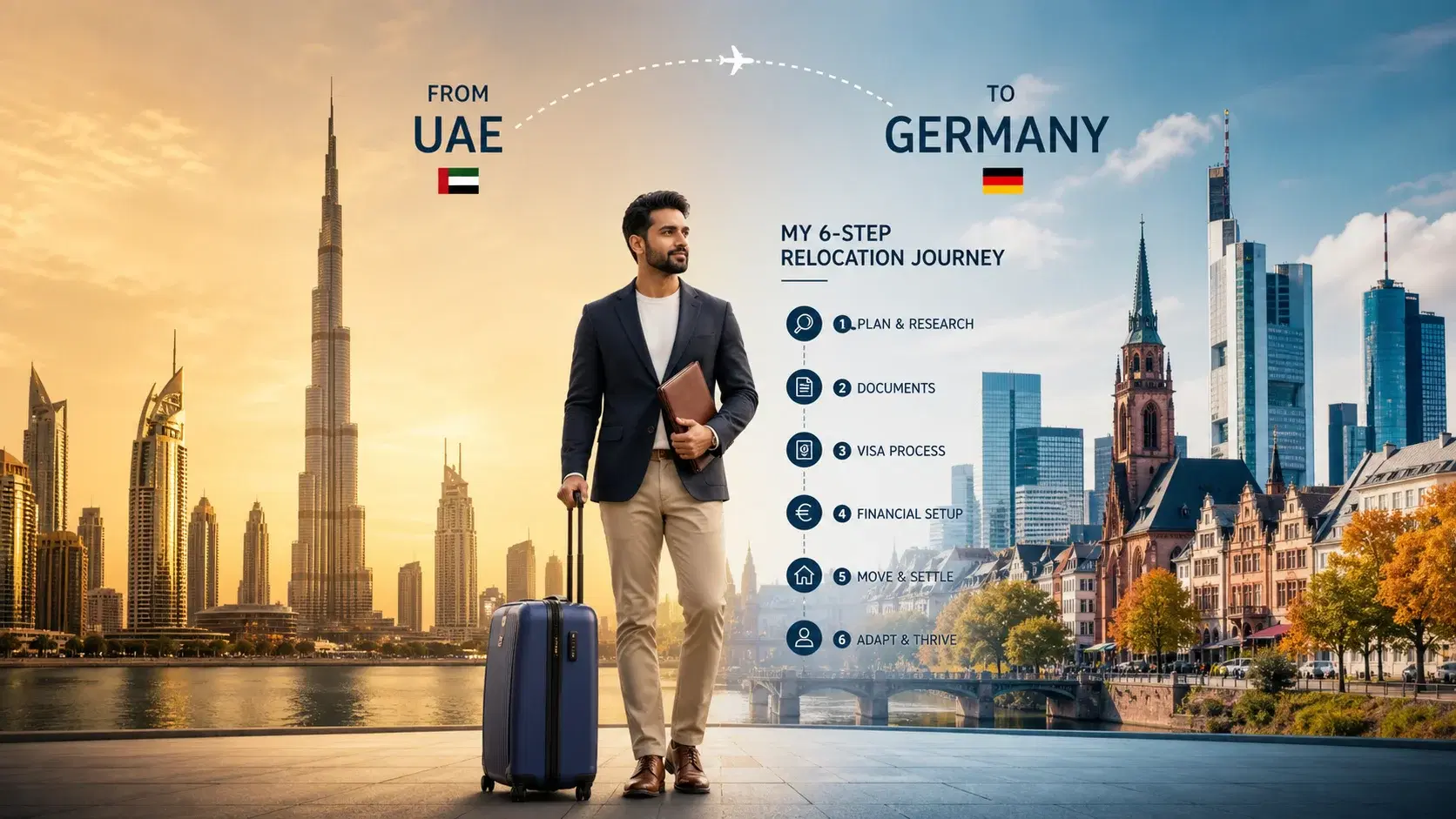
German CV (Lebenslauf) Format: The Ultimate 2026 Checklist & Mistakes to Avoid
Master your job hunt with our comprehensive 2026 German CV Lebenslauf format checklist. Learn the specific rules for photos, signatures, and layout to ensure your application stands out to German employers. Avoid common mistakes and sync your CV with your B1/B2 language goals today.
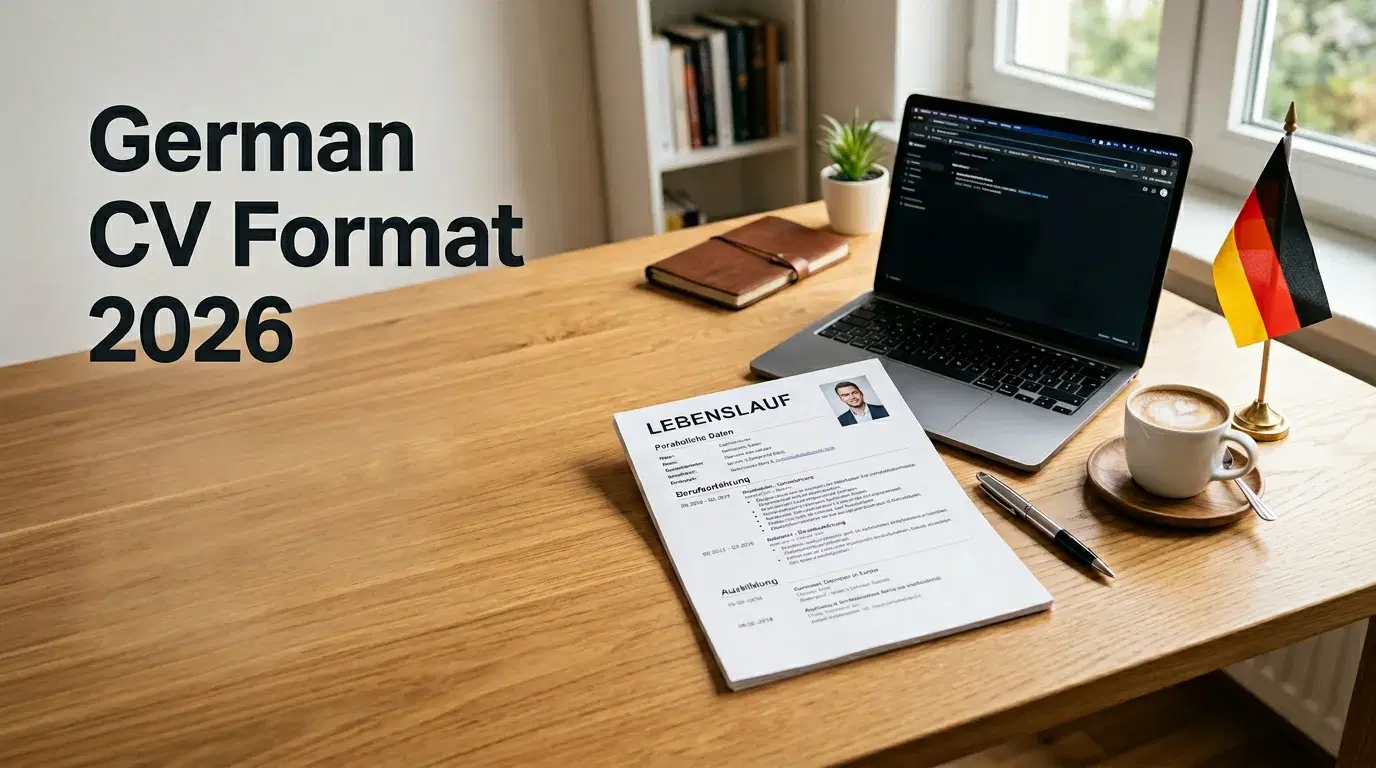
Applying for a job in Germany from the UAE, Sri Lanka, or anywhere else in the world is not simply a matter of running your current English CV through Google Translate. The German job market is built on precision, tradition, and highly specific cultural expectations. The German CV - known as the Lebenslauf - is a structured document with “unwritten rules” that differ drastically from the résumés expected in Dubai, the US, or the UK.
Whether you are aiming for a highly technical engineering role in Munich, a nursing position in Berlin, or securing an Ausbildung (vocational training) apprenticeship, your CV is the first “German exam” you must pass. If your document looks chaotic or fails to follow standard conventions, German HR managers may discard your application before even reading about your skills. This complete German CV Lebenslauf format checklist ensures your profile gets the attention it deserves.
The Essential German CV Lebenslauf Format Checklist (2026 Edition)#
To the German ear, “standardised” means “professional.” German employers appreciate order, clarity, and directness. Use this detailed checklist to ensure your document meets and exceeds the expectations of a German hiring manager.
1. Personal Information (Persönliche Angaben)
In many Western countries, including personal details is discouraged due to anti-discrimination laws. However, in Germany, transparency is traditionally expected. Place these details clearly at the very top of your CV:
- Full Name - clearly written, with your surname optionally in all caps (e.g., John SMITH) to avoid confusion for international names
- Address - your current full residential address
- Phone Number - include the international dialling code (e.g., +971 for UAE; +94 for Sri Lanka); ensure this is connected to your WhatsApp if you use it professionally
- Email Address - use a strictly professional format (firstname.lastname@email.com)
- Date and Place of Birth (Geburtsdatum und -ort) - legally optional under the AGG, but omitting it can still raise eyebrows with traditional HR managers; highly recommended to include
- Nationality (Staatsangehörigkeit) - crucial for expats, as it immediately tells the employer your visa requirements
- Marital Status (Familienstand) - completely optional in 2026; safely leave out to save space
2. The Professional Photo (Bewerbungsfoto)
Unlike in the US or UK, a high-quality professional headshot placed in the top right corner of your CV is expected in Germany. This is not a casual requirement.
- Size & Quality - usually 4.5 × 6 cm; must be taken by a professional photographer
- Attire - dress exactly as you would for an interview in your specific industry: suit and tie for finance; a neat, solid-coloured button-down for tech or healthcare
- Expression - look directly at the camera with a friendly, professional smile
3. Professional Summary (Kurzprofil) - Optional but Recommended
While not historically part of a traditional German CV, a short 3–4 sentence summary at the top is becoming highly popular, especially for international applicants. Use this space to briefly state your years of experience, core expertise, and your motivation for moving to Germany.
4. Professional Experience (Berufserfahrung)
This is the core of your Lebenslauf. It must be written in reverse chronological order - your most recent role first. German employers want to see what you are doing right now before looking at your past.
- Dates - always use MM/YYYY to MM/YYYY format (e.g., 03/2021 – 08/2025); German HR uses exact months to calculate salary bands
- Job Title & Company - your exact title, the company name, and the location (City, Country)
- Bullet Points - 3–5 bullets per role detailing responsibilities and, more importantly, measurable achievements; list results, not just tasks
5. Education (Bildungsweg)
Also in reverse chronological order. List your university degree, institution name, and dates attended.
- Grades - if you have excellent academic results, include your final grade
- Equivalence - if you have verified your degree on the German Anabin database, briefly note that your qualification is recognised in Germany
6. Language Skills (Sprachkenntnisse)
This is arguably the most critical section for international applicants. Do not just write “German: Fluent.” Use the official CEFR grading system:
| German Term | Meaning | CEFR Level |
|---|---|---|
| Muttersprache | Native Language | Native |
| Verhandlungssicher | Business Fluent | C1–C2 |
| Fließend | Fluent | B2 |
| Gute Kenntnisse | Good working knowledge | B1 |
| Grundkenntnisse | Basic knowledge | A1–A2 |
Pro Tip: always state your official certification alongside the level - e.g., “German: B2 – Goethe-Zertifikat.”
7. IT & Technical Skills (IT-Kenntnisse)
List the software, programming languages, or technical tools relevant to your industry. Categorise your proficiency clearly (e.g., Expert, Advanced, Basic).
8. Date and Signature (Ort, Datum und Unterschrift)
This is a unique German requirement that you must not skip. At the very bottom of the last page, type the current place and date (e.g., Dubai, 25.03.2026), and place a scanned copy of your handwritten signature directly above or next to it. This signals that all information provided is truthful and accurate.
Why Structure Matters: The DIN 5008 Standard and Beyond#
German administration loves official standards. In the business world, DIN 5008 is the national standard for typing and layout in business letters and documents. While you do not need to follow DIN 5008 with mathematical perfection for a modern CV, understanding its principles will help you design a document that feels native to a German reader.
- Clean Typography - avoid overly creative fonts; stick to professional, readable typefaces like Arial, Calibri, Helvetica, or Roboto; font sizes 10–12pt for body text
- Generous Margins - leave plenty of white space; a crowded, cluttered CV is viewed as disorganised
- The 2-Page Rule - unless you are an executive with 20+ years of experience, your Lebenslauf must not exceed two pages; be concise and ruthless about removing outdated information
- The File Format - never send a Microsoft Word document; always export as a PDF; name the file professionally (e.g., Lebenslauf_Firstname_Lastname.pdf)
Tailoring Your Application: Ausbildung vs. Skilled Worker Visa#
Your CV should not be a static document. Depending on the pathway you are taking to Germany, the emphasis of your Lebenslauf should shift.
Applying for an Ausbildung (Vocational Training)
Employers offering an Ausbildung know you are there to learn, not to manage a department. They are looking for reliability, trainability, and foundational skills. Your CV should heavily highlight school-leaving certificates, any part-time jobs (which demonstrate work ethic), volunteering experience, and most importantly, your dedication to learning the German language.
Applying as a Skilled Professional (Blue Card / §18b)
German employers are hiring you to solve specific problems. Your CV must be highly technical and results-oriented. If you are an IT professional in the UAE, do not just list “Software Developer” - list the exact tech stack, the scale of projects you deployed, and how your work impacted the company's bottom line. Ensure English and German language skills are prominently displayed.
7 Critical Mistakes to Avoid on Your German CV#
Even highly qualified candidates face rejection because they fall into common formatting traps. Avoid these seven fatal errors:
1. The “Ghost Gap” (Lücken im Lebenslauf)
German HR managers are notoriously suspicious of unexplained employment gaps of more than 2–3 months. If you took six months off to study German, travel, or care for a family member, list it explicitly. A clear explanation is always better than a mysterious void.
2. Using a “Selfie” for Your Photo
Cropping a photo from a wedding or using a smartphone selfie against a bedroom wall is an instant red flag. Invest in a studio headshot - it is a one-time cost that pays significant dividends in first-impression quality.
3. Exaggerating Language Levels
Claiming B2 German when you are at A2 will become painfully obvious within the first 60 seconds of a video interview. Be completely honest about your current level and mention if you are enrolled in a course to upgrade it. Honesty builds trust; exaggeration destroys it.
4. Forgetting the Anlagen (Attachments)
In Germany, a CV does not travel alone. It is part of a Bewerbungsmappe (Application Folder). You must attach your university degrees, language certificates, and Arbeitszeugnisse (letters of reference from past employers). Missing attachments signal either carelessness or a deliberate omission - neither reflects well.
5. The Missing Signature
Failing to sign and date your CV makes the document look incomplete to a traditional German recruiter. This is one of the easiest fixes
- and one of the most commonly overlooked by international applicants.
6. Translating Job Titles Too Directly
Job titles in the UAE can be inflated (e.g., “Vice President of First Impressions” instead of Receptionist). When translating your CV, use the standard German industry equivalent so the HR manager accurately understands your seniority and role.
7. Overly Creative Designs
Unless you are applying as a graphic designer, avoid CV templates with heavy graphics, multiple bright colours, or complex infographics. Keep it monochromatic, sleek, and text-focused. Germany values substance over style in professional documents.
Formatting for ATS (Applicant Tracking Systems)#
If you are applying to major German corporations like Siemens, SAP, or Volkswagen, a human will not be the first to read your CV - it will be scanned by an AI-driven Applicant Tracking System (ATS).
To pass the bot and reach a human, follow the German CV Lebenslauf format checklist strictly. ATS software looks for standard German headings like Berufserfahrung (Work Experience) and Bildungsweg (Education). If you use creative headings like “My Career Journey,” the AI cannot parse your data. Additionally, scan the original job description (Stellenbeschreibung) and naturally weave the employer's specific keywords into your bullet points.
The Perfect Pair: Combining Your CV with B2 Language Mastery#
Your CV is the roadmap of your career, but your German language proficiency is the engine that makes the journey possible. You can have the most beautifully formatted, DIN 5008-compliant Lebenslauf in the world - but if you cannot hold a fluid conversation with the hiring manager, your application will stall.
In 2026, German employers are heavily prioritising international candidates who have already achieved B1 or B2 proficiency before they even board a plane. By pairing your professional history with a certified language level, you prove to the employer that you are a “low-risk, high-reward” hire who is ready for immediate cultural and professional integration.
Market Your Success with Glück Global#
Crafting a flawless German CV is only half the battle. To successfully land a high-paying job in Germany from the UAE or Sri Lanka, you need a partner who understands every facet of the migration landscape.
- The Native-Logic Method - our AI-integrated online learning system helps you reach exam-ready B1 or B2 proficiency up to 2× faster than traditional UAE institutes
- 95% Pass Rate - we prepare you specifically for the Goethe-Institut and ÖSD exams, ensuring your CV carries the official certification German employers trust
- Complete Career Support - Platinum Plan members receive dedicated support in translating their UAE/global experience into the exact formats German employers demand
- End-to-End Visa Mastery - from navigating the Opportunity Card points system to understanding the “2+2 rule,” we guide you through the complex paperwork so you can focus on your career
Don't send an application that gets lost in translation. Send a “must-hire” profile. Explore our German Language Plans →