German Speaking Practice for Sri Lankan Students: 7 Methods That Actually Work
Struggling with the speaking module? Here are 7 German speaking practice methods built for Sri Lankan students -including AI tools and Tamil/Sinhala-specific tips.
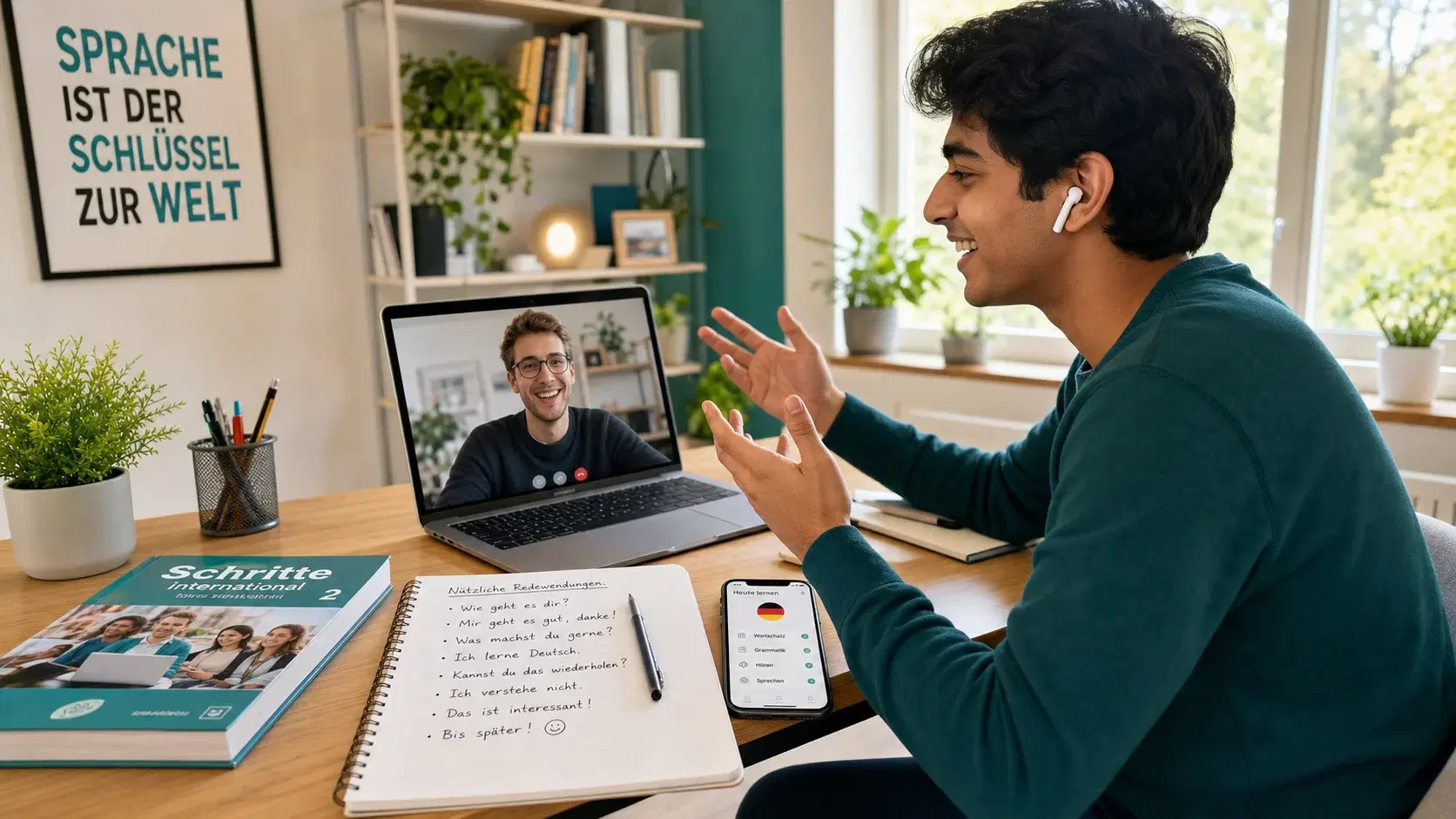
If your German reading is fine, your grammar is solid, but the moment a German person opens their mouth you freeze - you are not alone. German speaking practice for Sri Lankan students is the single hardest part of language learning, and the module where most B1 candidates lose their pass on first attempt. The good news: speaking is also the skill that improves fastest once you train it correctly. This post covers seven methods that consistently work for Sri Lankan learners, including the AI-based techniques now built into the Glück Global curriculum.
Why German Speaking Practice Is the Hardest Skill for Sri Lankan#
Students
Three reasons stack up against us:
- Pronunciation interference. Tamil and Sinhala have different vowel systems from German. The umlauts (ü, ö, ä) do not exist in either language. The German ch sound (as in ich) has no equivalent. The soft r at the end of words ( der, Wasser) is produced differently from the Tamil or Sinhala r.
- Sentence structure inversion. German puts the verb at the end of subordinate clauses ( weil ich morgen nach Berlin fahre). Tamil sentence structure is somewhat similar (SOV) which actually helps - but Sinhala speakers often struggle more. Either way, the speaking module demands real-time sentence construction that textbook study does not train.
- No daily exposure. Unlike English, which surrounds Sri Lankans through media and education, German is something you only encounter in class. You can finish an entire A1 textbook without ever having a real conversation in German.
These three barriers are why German speaking practice for Sri Lankan students has to be more deliberate than for learners in, say, Eastern Europe.
The 7 Methods That Actually Work#
1. Daily WhatsApp Voice Notes to Yourself
The cheapest, simplest method - and the one most learners ignore. Every morning, record a 2-minute German voice note describing your day, your plans, or a random topic from your textbook. Play it back the next day before recording the new one.
Why it works:
- Forces production, not just consumption
- You hear your own pronunciation mistakes
- Zero cost, zero scheduling - just open WhatsApp
- Three weeks of this builds noticeable fluency
Glück Global tells every student to start this on day one. The students who actually do it are the ones who pass speaking modules first time.
2. AI Conversation Partners (The 2026 Game-Changer)
ChatGPT, Claude, and Google Gemini can now hold extended German conversations at any level. Set up the prompt correctly and you have an unlimited, patient, and immediately available speaking partner.
A working starter prompt:
“Du bist mein Sprachpartner. Wir sprechen nur auf Deutsch auf B1-Niveau. Stelle mir Fragen über mein Leben in Sri Lanka. Korrigiere meine Fehler am Ende jeder Antwort.” Why it works:
- Available 24/7 - no scheduling conflicts
- No social anxiety - you can fail in front of an AI without embarrassment
- Real-time correction
- Voice mode (available in ChatGPT and Gemini in 2026) makes it a true speaking exercise, not just typing
The catch: AI partners are perfectly patient, which does not replicate exam pressure. Pair AI practice with real human practice - never substitute one for the other.
3. Tandem Partner from Germany
Apps like Tandem and HelloTalkmatch you with native German speakers who want to learn English, Sinhala, or Tamil. You spend 15 minutes speaking German, then 15 minutes helping them with your language. Why it works: - Real native pronunciation in your ear - Cultural exposure builds vocabulary you would never get from a textbook - Free, with a paid tier for premium matches - Forces accountability - your partner is waitingThe catch: Finding a reliable tandem partner takes 3–5 attempts. Most matches fade after a week. Stick with the ones who actually show up.
4. Speaking Club or Institute Conversation Hours
If your institute does not run dedicated speaking practice sessions, find one that does - or pay for a separate weekly speaking club. Two hours of structured conversation with classmates at your level, moderated by a teacher, is irreplaceable.
Why it works:
- Trains you for the actual B1 exam format (paired planning task with a stranger)
- Builds confidence - you realise everyone is making the same mistakes
- The teacher catches errors that you and AI miss
5. Shadowing Deutsche Welle Audio
Pick a 2-minute clip from Deutsche Welle's Langsam gesprochene Nachrichten. Listen once. Then play it again and shadow - speak along with the audio, matching pronunciation, rhythm, and intonation as closely as possible. Repeat the same clip every day for a week before moving on.
Why it works:
- Trains your mouth to produce German sounds at native speed
- Builds the natural rhythm of German sentences inside your head
- Fixes pronunciation issues that pure conversation practice misses
6. Tamil/Sinhala-to-German Pronunciation Drills
This is the most underused method. Spend 10 minutes a day drilling the specific sound contrasts that create the biggest interference for Sri Lankan speakers:
- ü vs u: fühlen (to feel) vs Fuhre (load) - round your lips tightly for ü
- ö vs o: schön (beautiful) vs schon (already) - lips forward and rounded for ö
- ä vs e: spät (late) vs sped - the German ä is more open than the e
- ch soft vs ch hard: ich vs Bach - soft ch is breathed at the front of the mouth; hard ch is in the throat
- Final r: der, Mutter - in German, the final r is almost an “a” sound, not the rolled r of Tamil or Sinhala
Record yourself and compare to native audio. YouTube and Forvo have free examples for every German word.
7. The 30-Day Routine That Actually Moves the Needle
Combining the methods above into a daily habit builds the cumulative speaking competence that single sessions never achieve. A sustainable daily routine:
- Morning (5 min): WhatsApp voice note - describe your day plan in German
- Midday (15 min): AI conversation session - use a topic prompt, request corrections
- Evening (10 min): Deutsche Welle shadowing - same clip as yesterday
- Evening (10 min): Pronunciation drills - pick two umlaut pairs and practice contrast
- Weekly (60–90 min): Speaking club or tandem partner session
Total daily time: approximately 40–45 minutes. Sustained over 30 days, this routine has moved more Sri Lankan students past the B1 speaking module than any single textbook ever has.
Common Mistakes to Avoid#
- Practising only with classmates. You replicate each other's accents and mistakes. Mix in native speakers and AI.
- Memorising long monologues. Examiners can tell. The B1 exam tests real-time construction, not memorisation.
- Avoiding the modules you fear. Sri Lankan students often skip Sprechen practice because it is uncomfortable. That discomfort is exactly where progress lives.
- Translating before speaking. Train yourself to think in German from the start, even in simple sentences. The pause to translate is what burns your exam clock.
- Perfectionism. Speaking with mistakes is far better than silence. Examiners reward attempts.
The Hidden Advantage for Sri Lankan Learners#
Most Sri Lankans grow up multilingual - Sinhala or Tamil at home, the other at school, English in business and education. Your brain is already trained to switch languages, hold multiple grammars, and code-switch under pressure. This is a real cognitive advantage that learners from monolingual backgrounds do not have.
The German you learn becomes your fourth or fifth language, not your second. The neural pathways are already there. The only thing missing is practice.
Why This Matters More in 2026#
Germany's labour market has formally opened to Sri Lankan candidates in nursing, IT, hospitality, and the skilled trades. But every job offer, every Ausbildung contract, and every recognition process now demands proven German speaking ability - not just a passed written exam. The candidates who succeed will be the ones who treated speaking practice as a daily habit, not an exam-week panic.
Start tomorrow morning with a 2-minute voice note. Six weeks from now you will sound like a different person.
Glück Global's German curriculum integrates AI-assisted speaking practice, native-led conversation hours, and Tamil/Sinhala-specific pronunciation coaching. Explore our intensive speaking modules →
Frequently Asked Questions#
How can I practice German speaking if there are no native speakers
around me in Sri Lanka?
Use AI tools like ChatGPT or Google Gemini in voice mode for unlimited daily practice. Add tandem partners through Tandem or HelloTalk for real native exposure. Combine with daily WhatsApp voice notes. This three-method stack delivers more speaking practice per week than living in Germany would for many learners.
Why do Sri Lankans struggle with German pronunciation specifically?
Tamil and Sinhala do not have German vowel sounds like ü, ö, and ä, or the soft ch sound. The Tamil and Sinhala r is rolled differently from the German final r. These specific gaps require deliberate drilling - typically 10 minutes a day of contrast pairs with recorded comparison to native audio.
Can ChatGPT really help me pass the B1 speaking exam?
Yes, as part of a complete prep plan. AI conversation practice builds fluency, confidence, and vocabulary recall. It cannot fully replicate exam pressure or the partner-based planning task of the B1 Sprechen module, so pair it with weekly speaking club sessions and at least four mock exams before the real test.
How much daily speaking practice do I need to pass B1?
Minimum 30 minutes per day of active production - speaking out loud, not just listening. Students who reach B1 speaking fluency in 6–8 months consistently average 45 minutes of daily speaking practice across multiple methods: voice notes, AI conversation, shadowing, and tandem calls.
Should I practice with other Sri Lankan students or only with
Germans?
Mix both. Classmates give you safe practice ground and shared vocabulary. Native German speakers correct your pronunciation and pace. Practising only with classmates risks reinforcing shared mistakes. A balanced ratio of 60% classmates and AI to 40% native speakers works well at B1 level.
Is being multilingual already (Tamil, Sinhala, English) actually an
advantage for learning German?
Yes, significantly. Multilingual learners process new grammar and vocabulary faster because their brain is already trained to switch between language systems. Sri Lankans typically reach functional German faster than monolingual English speakers from countries like the US or UK. The disadvantage is purely speaking practice availability - which the methods in this post directly solve.