Nursing in Germany from Sri Lanka: Complete Career Guide 2026
Discover the complete 2026 guide to Nursing in Germany from Sri Lanka. Learn about requirements, salaries, and how to start your healthcare career today.
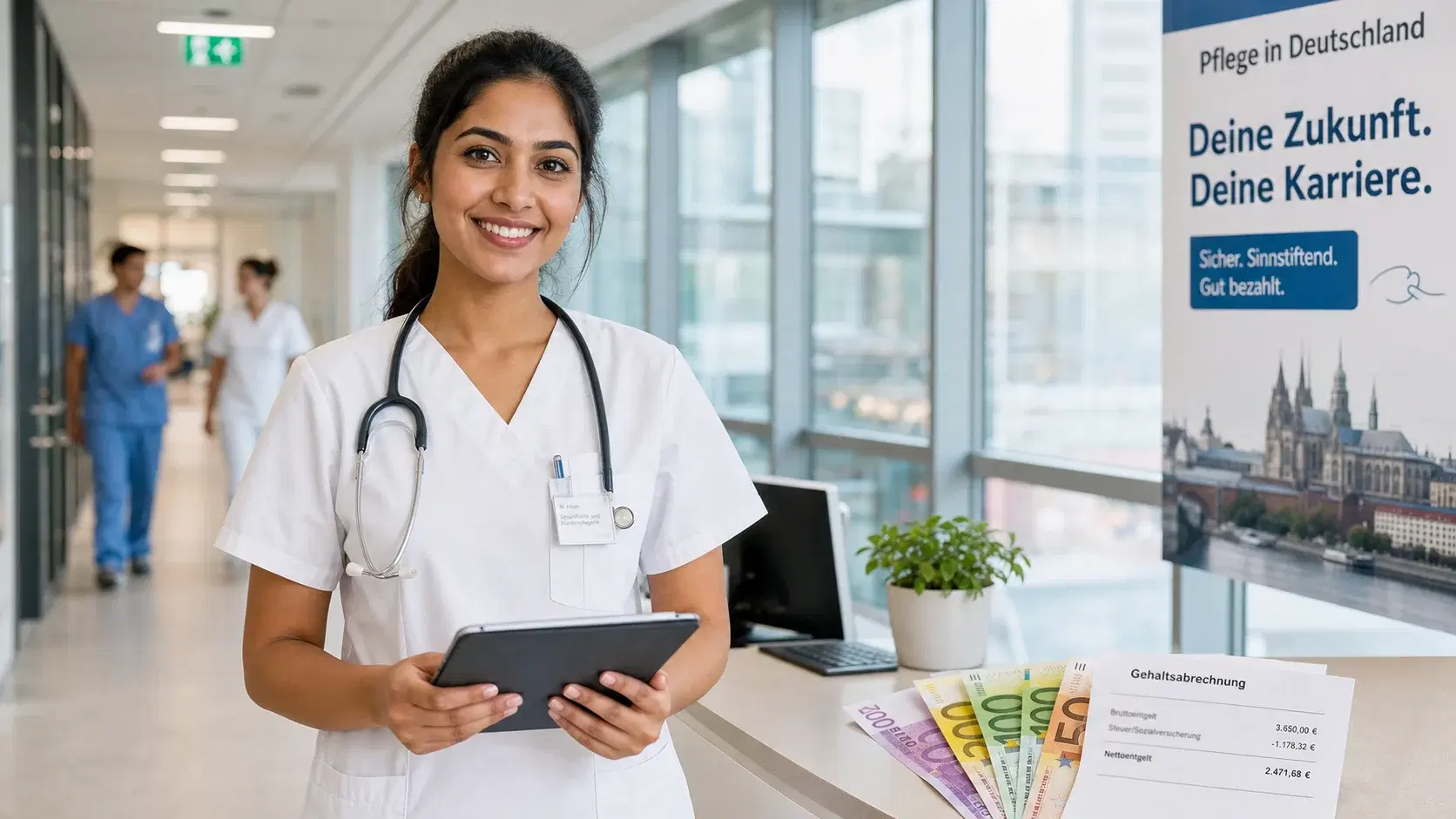
Germany needs 30,000–40,000 nurses right now, and Sri Lankan nurses are among the most qualified candidates to fill those roles. With a BSc or Diploma in Nursing, B2-level German, and a recognised qualification, a Sri Lankan nurse can earn €2,800–€4,000 per month gross in Germany, compared to LKR 40,000–80,000 per month at home. Glück Global has helped Sri Lankan nurses navigate every stage of this pathway - from A1 German classes in Kandy to signed employment contracts in Germany.
Why Germany Urgently Needs Nurses in 2026#
Germany's nursing shortage is structural, not cyclical. Three forces drive it simultaneously:
- Ageing Population: Germany has one of Europe's oldest populations. By 2035, the number of people requiring long-term care is projected to rise by more than 30%. More elderly patients mean more nurses - and no domestic pipeline large enough to supply them.
- Retiring Workforce: Hundreds of thousands of Germany's existing nurses will retire in the next 10 years. The domestic nursing training system cannot replace them fast enough.
- Historical Recruitment Sources Drying Up: Germany previously relied on nurses from Eastern European countries (Poland, Romania, Bosnia). As those economies improved and wages rose, this flow has slowed dramatically, forcing Germany to look further afield.
Germany currently employs approximately 1.7 million nurses, of whom nearly 300,000 (18%) are foreign nationals - and that share is growing every year. Long-term projections from the ifo Institute and ZEW estimate Germany could face a nursing shortfall of 280,000– 690,000 by 2049. The immediate vacancy figure stands at 30,000– 40,000 as of early 2026. This is not a temporary hiring surge - it is a structural, decades-long demand for international nursing talent, and Sri Lanka is positioned to benefit.
What Sri Lankan Nurses Need to Qualify for Germany#
Language Requirement
B2 German is legally required for full professional registration as a nurse in Germany. This is non-negotiable - it is written into the German nursing recognition law (Pflegeberufegesetz). B2 means you can communicate competently with patients, colleagues, and medical teams.
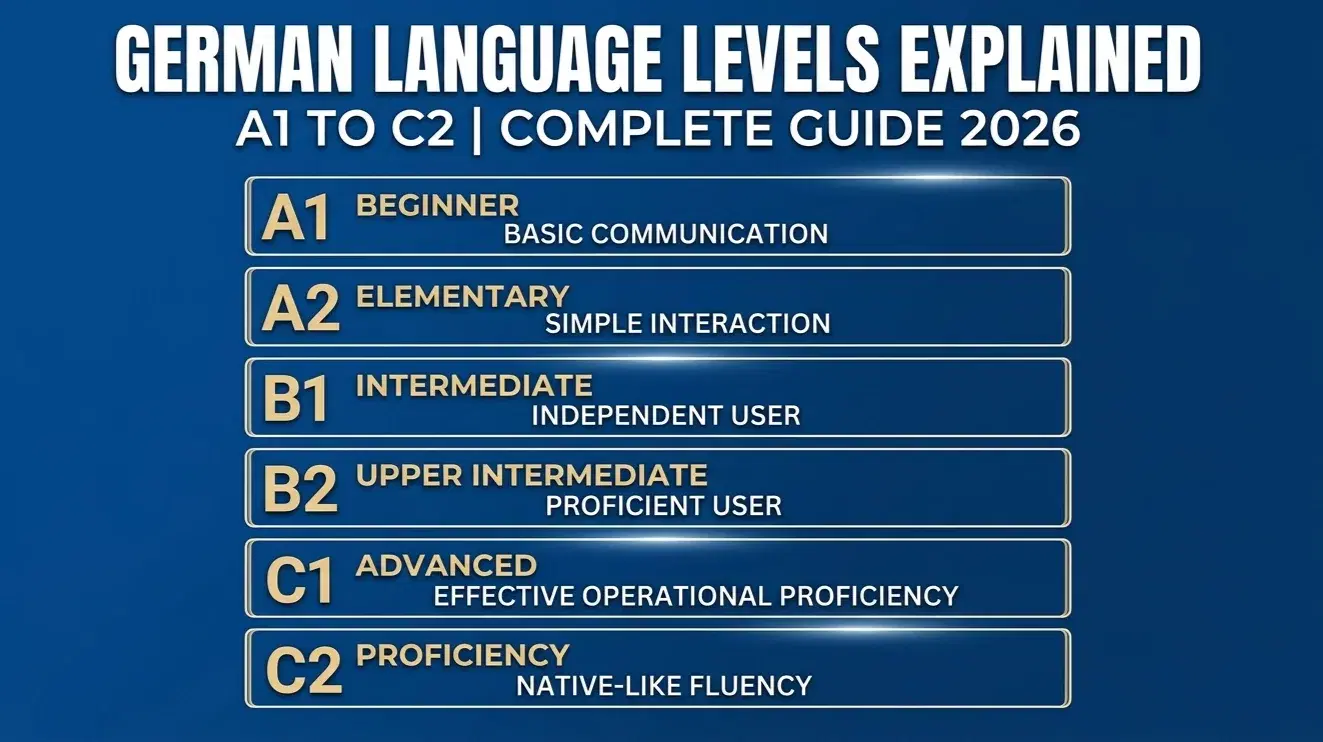
Timeline to B2 from zero:
- A1: ~3 months (with focused study)
- A2: ~5–6 months
- B1: ~8–10 months
- B2: ~12–15 months
Glück Global's AI-integrated German courses - taught in English, Sinhala, Tamil, and Malayalam - are designed around this precise timeline for nursing candidates.
Academic Qualification
A 3-year Diploma in Nursing or a 4-year BSc in Nursing from an institution recognised by the Sri Lanka Nursing Council qualifies for the German recognition process. A BSc generally has a stronger chance of full or near-full recognition.
Documents Required for Recognition Application
- Original nursing diploma/degree (with certified German translation)
- Academic transcripts
- Internship / clinical placement records
- Sri Lanka Nursing Council registration certificate
- Police clearance certificate
- Proof of German language proficiency
- Passport copy
Health and Character Fitness
Germany requires proof of medical fitness and personal aptitude as part of the nursing registration process.
Salary Comparison: Sri Lanka vs Germany (Nurses, 2026)#
| Role | Sri Lanka (Monthly, LKR) | Sri Lanka (Monthly, EUR) | Germany (Monthly, EUR Gross) | Germany (Monthly, EUR Net) |
|---|---|---|---|---|
| Staff Nurse (Government) | LKR 45,000–65,000 | ~€135–€195 | €2,800–€3,500 | €1,900–€2,400 |
| Staff Nurse (Private hospital) | LKR 60,000–100,000 | ~€180–€300 | €2,800–€3,500 | €1,900–€2,400 |
| Registered Nurse (experienced) | LKR 80,000–140,000 | ~€240–€420 | €3,200–€4,800 | €2,200–€3,300 |
| Specialist Nurse (ICU/OR) | LKR 100,000–180,000 | ~€300–€540 | €4,000–€5,500 | €2,700–€3,800 |
| Nurse Manager / Senior | LKR 120,000–200,000 | ~€360–€600 | €5,000–€6,500 | €3,400–€4,500 |
LKR–EUR conversion at approximate 2026 rate of ~333 LKR per EUR. Germany figures are gross; net depends on tax class, health insurance contributions, and state.
In practical terms: a Sri Lankan Registered Nurse working in Germany takes home 7–10× their Sri Lanka salary in purchasing-power-equivalent terms, while benefiting from Germany's universal healthcare, social security, and pension systems.
The Qualification Recognition Process (Anerkennung) Step by#
Step
Germany's qualification recognition (Anerkennung) is the most complex and time-consuming part of the nursing migration pathway. Here is exactly how it works.
Phase 1: Apply to the Competent Authority (Months 1–4)
The competent authority is the state health authority ( Landesbehörde or Regierungspräsidium) in the German federal state where you plan to work. Each of Germany's 16 states has its own authority. Glück Global identifies the right authority for your employer placement.
The authority conducts an equivalence assessment ( Gleichwertigkeitsfeststellung) comparing your Sri Lankan qualification to the German nursing standard ( Pflegefachkraft). This takes up to 4 months. Possible outcomes:
- Full Recognition (Vollanerkennung): Your qualification is deemed fully equivalent. You receive a German nursing licence and can begin work immediately upon arrival.
- Partial Recognition (Defizitbescheid): Your qualification is mostly equivalent but has specific gaps. You receive a deficiency notice listing the gaps and must complete a compensatory measure before receiving full registration.
- No Recognition: Rarely applies to 3–4 year accredited nursing qualifications from Sri Lanka - usually only for very short or unaccredited programmes.
Phase 2: Compensatory Measures - Kenntnisprüfung vs
AnpassungslehrgangIf you receive partial recognition, you choose between two compensatory pathways: | Factor | Kenntnisprüfung (Knowledge Test) | Anpassungslehrgang (Adaptation Course) | | --- | --- | --- | | What it is | Theoretical and practical examination at a German nursing school | Supervised internship (practical training) at a hospital | | Duration | 6–9 months (prep course + exam) | 4–12 months (depending on identified gaps) | | Where | German nursing school (some preparation can be virtual) | Must be completed at a healthcare facility in Germany | | Final assessment | Written, oral, and practical exam | Oral interview / final review by employer | | Prep course required? | Yes - mandatory preparatory course | Not required; on-the-job learning | | Best suited for | Candidates with strong theoretical knowledge | Candidates with strong practical experience | | Pay during measure | Part-time work (up to 20 hrs/week) permitted | Part-time work permitted | Glück Global's recommendation: Most Sri Lankan nursing graduates from BSc programmes are well-positioned for the Kenntnisprüfung pathway, which has a more predictable 6–9 month timeline. Diploma holders may benefit from the Anpassungslehrgang's hands-on structure.
During either compensatory measure, you can work up to 20 hours per week in a part-time capacity at a different healthcare institution.
Phase 3: Full Registration (Pflegefachkraft)
After successfully completing the compensatory measure, you submit the completion certificate to the state authority. Full recognition is granted, giving you the same professional rights as a German-trained nurse. You can now work full-time, independently, at a competitive registered nurse salary.
Step-by-Step Timeline: Sri Lanka to Registered Nurse in Germany#
| Phase | Activity | Duration |
|---|---|---|
| 1 | Enrol in German A1 course with Glück Global (Kandy) | Month 1 |
| 2 | Complete A1 → A2 → B1 → B2 language training | Months 1–13 |
| 3 | Document collection and certified translation | Months 3–5 |
| 4 | Submit Anerkennung application to German state authority | Month 5–6 |
| 5 | Equivalence assessment result | Months 9–10 |
| 6 | Employer match and job offer secured by Glück Global | Months 10–12 |
| 7 | Visa application at VFS Global, Colombo | Month 12–13 |
| 8 | Arrive in Germany; begin Kenntnisprüfung prep or Anpassungslehrgang | Month 14–15 |
| 9 | Complete compensatory measure (if required) | Months 15–22 |
| 10 | Full recognition granted; begin full-time work as Pflegefachkraft | Month 22–24 |
Total timeline to full employment: approximately 18–24 months from starting German. Candidates with a BSc in Nursing and strong academic records may achieve full recognition without a compensatory measure, shortening the timeline to 12–16 months.
Benefits Beyond Salary: What German Nursing Offers#
Working as a nurse in Germany comes with a comprehensive employment package rarely available in Sri Lanka:
- ** Statutory Health Insurance (Gesetzliche Krankenversicherung) ** - employer and employee share contributions; full medical, dental (basic), and hospitalisation coverage from day one
- Pension Contributions - Germany's mandatory pension system (Rentenversicherung) means every working month builds retirement security; contributions split equally between employer and employee
- Paid Annual Leave - minimum 20 working days per year under German labour law; many collective bargaining agreements provide 25–30 days
- Strong Union Protections - German nursing is protected by collective bargaining agreements ( Tarifvertrag); wages set by agreements between unions (ver.di) and employer associations prevent arbitrary pay cuts
- Path to Permanent Residency - nursing is on Germany's shortage occupation list; after 4 years of qualified employment (or 21 months via EU Blue Card), nurses can apply for permanent residency; after 8 years of legal residence, German citizenship becomes possible
- Family Reunification - once you hold a valid work residence permit and stable income, your spouse and dependent children can join you in Germany
How Glück Global Specifically Helps Nurses#
Glück Global is one of the few SLBFE-licensed agencies in Sri Lanka that runs a dedicated healthcare migration programme. Here is what nursing candidates receive:
- Tailored German Language Training - nursing- specific vocabulary is integrated from B1 onwards: medical terminology, patient communication, chart documentation, and emergency protocols; this accelerates performance in both the Kenntnisprüfung and on the ward
- Document Preparation and Recognition Guidance - Glück Global's team prepares and coordinates all documentation for the Anerkennung application: certified translations, affidavit preparation, Nursing Council liaison, and state authority submission
- Employer Network in Germany - 450+ students have passed through the Glück Global pipeline; the company holds working relationships with German hospitals and care facilities specifically looking for Sri Lankan nursing talent; employer-sponsored applications qualify for Germany's Fast-Track Procedure, reducing visa wait times significantly
- Pre-Departure Nursing Orientation - candidates receive orientation covering German hospital hierarchy and professional titles, ward communication standards, patient rights under German law, and practical life setup: Anmeldung, bank account, health insurance enrolment
- Germany Office Support (Bürstadt) - after arrival, Glück Global's Germany-based team continues to support nurses through their compensatory measure, accommodation challenges, and employer integration
Life as a Sri Lankan Nurse in Germany: What to Expect#
Workplace Language and Culture
German hospitals operate with precise documentation standards. Patient records, handover notes, and care plans are maintained in written German. This is why B2 language proficiency is not just a bureaucratic requirement - it is a direct patient safety standard. Sri Lankan nurses who invest in high-quality B2 German training consistently report faster integration and better performance evaluations.
German professional culture values punctuality, clear communication, and protocol adherence. Hierarchy is respected but typically flatter than in South Asian hospital environments. Nurses are expected to raise clinical concerns directly and document everything.
Shift Patterns and Working Hours
German nursing contracts typically cover 38–40 hours per week with collective bargaining protections. Shift work (early, late, and night shifts) is standard in inpatient settings. Night shift differentials and weekend supplements meaningfully boost take-home pay above base gross salary figures.
Social Integration
Germany's Sri Lankan community is small but growing, concentrated in major cities and university towns. Most Sri Lankan nurses placed through Glück Global join hospital teams with other internationally recruited professionals - many from the Philippines, India, and Bosnia - creating a supportive peer environment. German language skills accelerate integration both professionally and socially.
Permanent Residency Timeline
Nursing is classified as a shortage occupation (Mangelberuf) in Germany. This means: - After 4 years of qualified employment, you are eligible for permanent residency (Niederlassungserlaubnis) - EU Blue Card holders in nursing can apply after just 21 months - After 8 years of legal residency, German citizenship is possible > Ready to start your nursing career in Germany? Book your free eligibility assessment with Glück Global → ## Frequently Asked Questions - Nursing in Germany from Sri Lanka ### What German level do I need to work as a nurse in Germany? B2 is the minimum legally required for full professional nursing registration in Germany. You need a recognised B2 certificate (Goethe-Zertifikat B2, TELC B2, or ÖSD B2) before applying for full Anerkennung. Glück Global's courses are designed to get Sri Lankan nurses to B2. ### Is my Sri Lankan nursing degree recognised in Germany? A BSc or Diploma in Nursing from a Sri Lanka Nursing Council-accredited institution is generally eligible for the Anerkennung process. Full recognition is less common than partial recognition - most Sri Lankan nurses complete theKenntnisprüfung or Anpassungslehrgang as a compensatory measure.
How long does qualification recognition take?
The equivalence assessment by the competent authority takes up to 4 months after complete documentation is submitted. If a compensatory measure is required, add 6–12 months. Total recognition timeline: 6–18 months from first application.
Can I work in Germany while completing the compensatory measure?
Yes. You may work up to 20 hours per week in a part-time capacity independent of your compensatory measure placement. This allows nurses to earn while completing the Kenntnisprüfung prep or Anpassungslehrgang.
What is the difference between Kenntnisprüfung and
Anpassungslehrgang?
Kenntnisprüfung is a formal exam (theoretical + practical) at a German nursing school, preceded by a 6-month preparation course. Anpassungslehrgang is a supervised internship at a hospital (4–12 months), ending in an oral review. Most Sri Lankan BSc graduates choose Kenntnisprüfung.
What salary can a Sri Lankan nurse expect in Germany?
A registered nurse in Germany earns €2,800–€4,800/month gross, depending on experience, specialisation, and state. Net take-home is approximately €1,900–€3,300/month after taxes and social contributions - 7–10× the typical Sri Lankan nursing salary.
Does Germany provide accommodation for international nurses?
Some hospital employers offer subsidised accommodation for the first 3–6 months. Glück Global advises candidates on housing options and connects them with shared accommodation (WG) networks in their placement city.
Can male nurses work in Germany?
Absolutely. German nursing has no gender restrictions. Male nurses ( Pflegefachmann) are employed in all hospital and care settings. Applications from male and female Sri Lankan nurses are equally competitive.
How is family reunification handled for nurses in Germany?
Once you hold a German work residence permit and can demonstrate stable income and adequate housing, your spouse and dependent children can apply for family reunification ( Familiennachzug). Processing typically takes 3–6 months from application.
What happens if I fail the Kenntnisprüfung?
You are permitted to retake the examination. Your residence permit for recognition purposes can be extended by 12 months to accommodate a retake or delays. Glück Global provides continued preparation support in this situation.