Skilled and Semi-Skilled Professionals in Germany: Opportunities and How Glück Global Can Help
Complete 2026 guide for skilled or semi-skilled professionals in Germany - in-demand sectors, salary expectations, visa pathways, permanent residency, and how Glück Global supports your move.

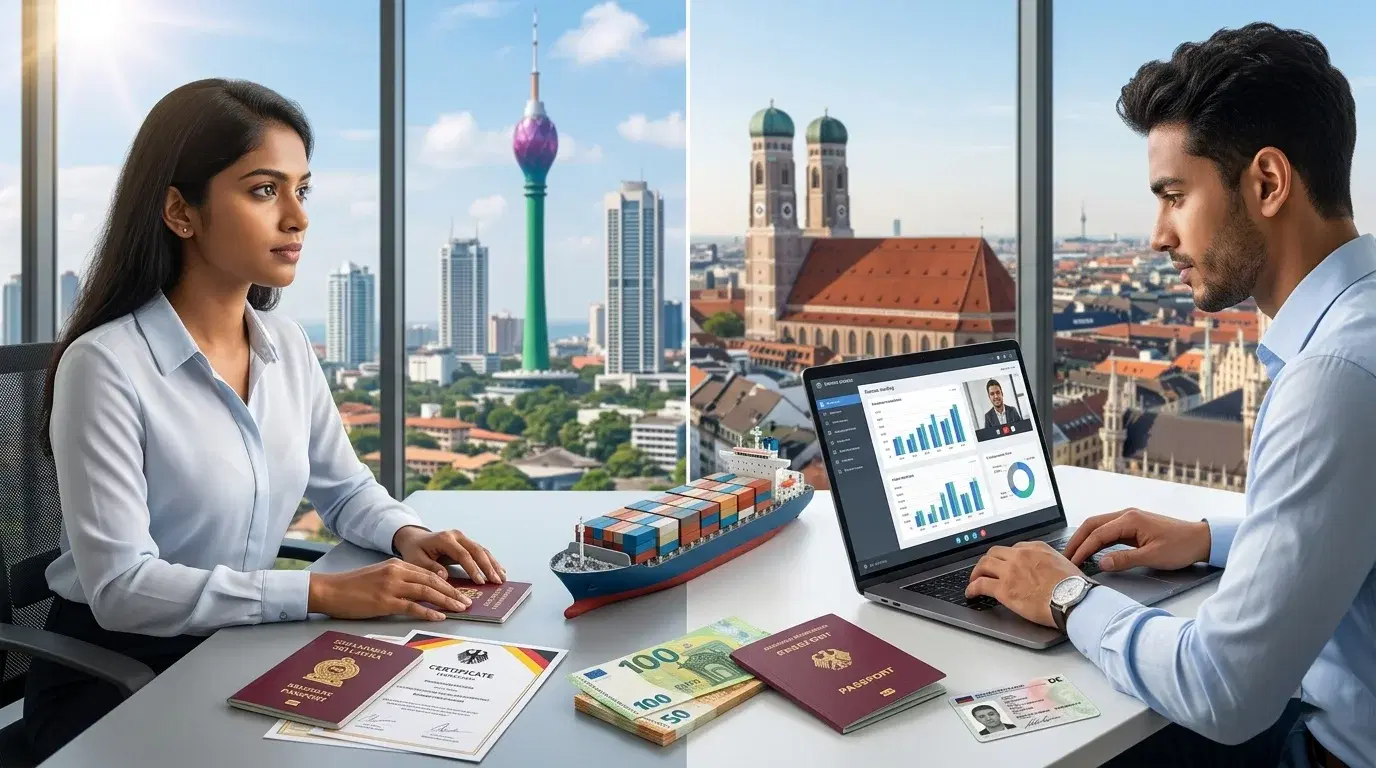
Germany is one of the world's strongest economies - and it has a serious talent shortage. Sectors like healthcare, engineering, construction, IT, logistics, and hospitality are actively seeking both skilled or semi-skilled professionals in Germany from abroad. For Sri Lankans and South Asians with trade qualifications or vocational experience, this is one of the most accessible and rewarding migration pathways available today.
Why Germany Needs Skilled and Semi-Skilled Workers#
Germany's ageing population combined with rapid industrial growth has created a sustained labour shortage across critical sectors. Unemployment in Germany hovers below 3%, and employers are actively recruiting internationally to fill gaps that cannot be met domestically. For international workers, this means genuine demand - not just opportunity on paper.
- Healthcare - nurses, caregivers, medical assistants, and physiotherapists
- Engineering - mechanical, electrical, and civil engineers
- Construction & Trades - electricians, carpenters, welders, plumbers, and mechanics
- IT & Technology - software developers, data analysts, cybersecurity specialists
- Logistics & Manufacturing - warehouse supervisors, forklift operators, production line technicians
- Hospitality - hotel and kitchen staff, service professionals with vocational training
Key Advantages for Skilled or Semi-Skilled Professionals in Germany#
Competitive Salaries
Skilled workers in Germany earn monthly salaries between €2,500 and €5,000 depending on sector and experience. Semi-skilled roles typically start at €2,000–€3,000 per month - significantly higher than equivalent roles in South Asia, with far stronger purchasing power within Germany.
Comprehensive Social Benefits
All employees in Germany benefit from the national social security system - universal healthcare, pension contributions, unemployment insurance, and up to 30 days of paid annual leave. These benefits apply from day one of legal employment, regardless of nationality.
Career Growth via Ausbildung
Germany's renowned Ausbildung (dual vocational training) system allows semi-skilled workers to upgrade their qualifications while working. Practical on-the-job training is combined with classroom learning - giving ambitious newcomers a clear pathway from entry-level positions to skilled specialist roles.
Pathway to Permanent Residency
After working legally in Germany for 27 months- or 21 months with B1 German proficiency - skilled and semi-skilled workers can apply for a permanent settlement permit. This includes the right to family reunification, meaning your spouse and children can join you in Germany.
Work–Life Balance
Germany consistently ranks among the best countries globally for work-life balance. Standard working hours are 35–40 hours per week, overtime is regulated by law, and parental leave provisions are among the most generous in Europe.
Visa Pathways for Skilled and Semi-Skilled Workers#
| Visa Type | Who It Suits | Key Requirement |
|---|---|---|
| Skilled Worker Visa | Vocational graduates with a recognised qualification and a job offer | Recognised qualification + job offer |
| EU Blue Card | University graduates in shortage occupations | Degree + salary threshold (€43,759+) |
| Opportunity Card (Chancenkarte) | Qualified professionals looking for a job without a prior offer | Points-based system - qualifications, age, language |
| Au Pair / FZV | Young adults aged 18–26 wanting cultural exchange | Basic German (A1–A2) + host family placement |
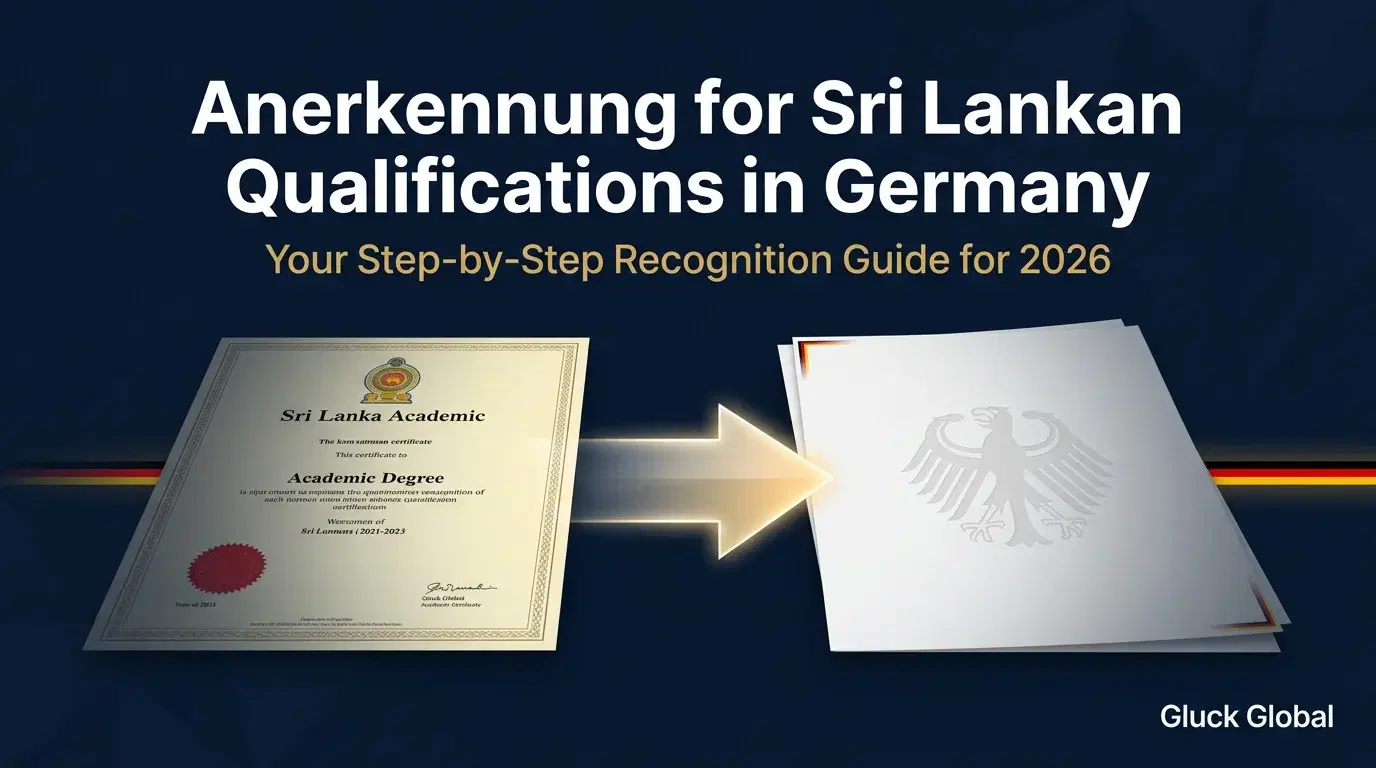
For semi-skilled workers, the most common starting point is the Skilled Worker Visa following a recognised vocational qualification, or the Opportunity Cardif you meet the points threshold. Glück Global assesses your profile and recommends the most suitable pathway for your background. ## Qualification Recognition - A Critical Step Germany does not automatically accept foreign qualifications. Before applying for most work visas, your Sri Lankan or Indian vocational certificate or degree must be formally assessed through theAnerkennungsprozess (recognition procedure).
- IHK FOSA handles recognition of non-academic vocational qualifications (trades, technical professions)
- ZAB issues comparability statements for higher education degrees in non-regulated professions
- Regulated professions (nursing, medicine, teaching) require additional authority approval before you can practise
Starting the recognition process early - ideally while still in Sri Lanka and during your language training - ensures both timelines align with your visa appointment.
How Glück Global Supports Your Move#
German Language Training
Language is the foundation of everything - from visa success to workplace integration. We offer live online German classes from A1 to B2, taught in Sinhala, Tamil, and English by experienced instructors. Our programmes are designed around the language requirements for specific visa and job types, not just general learning.
Job Matching and Placement Support
Our team connects you with German employers who are actively recruiting in your sector. From CV preparation and interview coaching to coordinating between you and the employer - we support you through to a signed contract. We maintain a 95% job placement success rate across our healthcare, engineering, and trades programmes.
Visa and Documentation Assistance
Navigating German immigration paperwork is complex. We guide you step by step through qualification recognition, document verification, embassy preparation, and the visa application itself - minimising delays and rejections.
Pre-Departure and Post-Arrival Support
Before you leave, we prepare you with cultural orientation, German workplace etiquette, and practical advice on housing and transport. After you arrive, we continue to support you - from opening a bank account and registering your address to connecting with Sri Lankan communities in your city.
Whether you are a trained nurse, an electrician, a software developer, or a semi-skilled trade worker - if your goal is Germany, Glück Global has the programme, the network, and the experience to get you there. Contact us today for a free consultation →
Frequently Asked Questions#
Can semi-skilled workers move to Germany without a degree?
Yes. Semi-skilled workers with vocational training or a recognised trade certificate can qualify for the Skilled Worker Visa. In some cases, substantial work experience (3+ years in the last 7) can substitute for formal qualifications, particularly in IT. Glück Global assesses your specific background to find the right pathway.
What German level is required for a skilled worker visa?
The minimum German language requirement varies by profession and employer. Most trade and healthcare roles require at least B1. For some IT roles, English may be sufficient - but B1 also unlocks the faster 21-month path to permanent residency.
How long does it take to get permanent residency as a skilled
worker?
After 27 months of legal employment in Germany - or just 21 months if you have B1 German proficiency - you can apply for a permanent settlement permit ( Niederlassungserlaubnis).