The Ultimate Guide: Requirements for Opportunity Card in Germany 2026
The ultimate 2026 guide to Opportunity Card (Chancenkarte) requirements - qualification recognition, language skills, age limits, points system, financial proof, application process at German Embassy Colombo, and complete document checklist.

The ultimate 2026 guide to Opportunity Card (Chancenkarte) requirements - qualification recognition, language skills (A1 German or B2 English), age limit (under 40 gets more points), work experience, financial proof (enough funds to cover job search period), application process at German Embassy Colombo, and complete document checklist.
What Is the Opportunity Card (Chancenkarte)?#
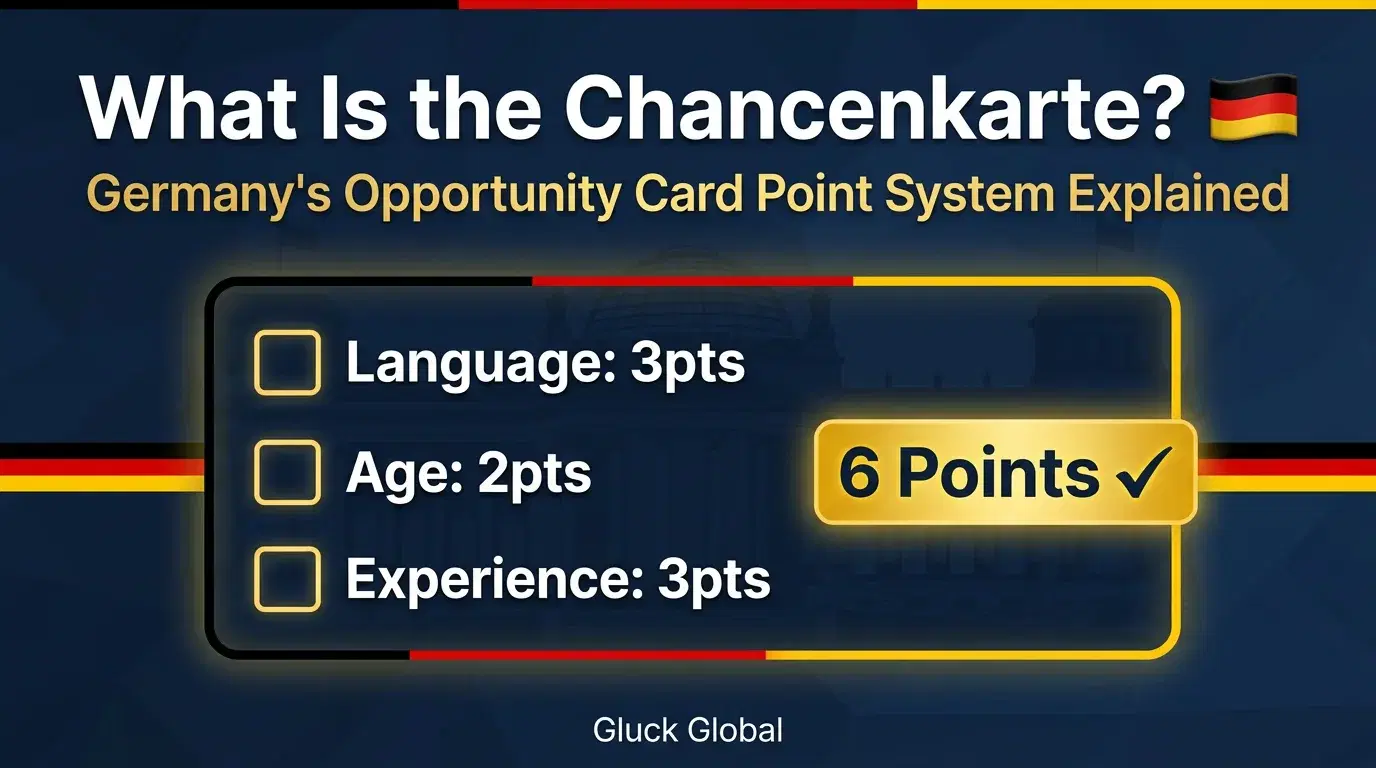
The Opportunity Card (Chancenkarte) is Germany's points-based job-seeker visa introduced under the Skilled Immigration Act. It allows qualified professionals from non-EU countries - including Sri Lanka - to enter Germany for up to 12 months to search for employment. No job offer is required at the time of application. You qualify by earning a minimum of six points across four categories.
The Four Points Categories#
1. Qualifications (Up to 4 Points)
- 4 points: Recognised university degree or vocational qualification equivalent to German standard
- 3 points: Degree from a recognised university (not yet fully recognised as equivalent)
- 2 points: 5+ years of professional work experience in a skilled occupation (past 7 years)
- 1 point: 2+ years of professional work experience in a skilled occupation (past 7 years)
2. Language Skills (Up to 3 Points)
- 3 points: German C1 or higher
- 2 points: German B2
- 1 point: German A1 OR English B2
You need at least 1 point from this category to apply. A1 German or B2 English is the baseline language requirement.
3. Age (Up to 2 Points)
- 2 points: Under 35 years old
- 1 point: 35–39 years old
- 0 points: 40+ years old
4. Germany Connection (Up to 2 Points)
- 2 points: 5+ years of residence in Germany (past 7 years)
- 1 point: Previous stay in Germany (tourism, short visit, language course in past 7 years)
- 1 point: Spouse/partner already in Germany
- 1 point: Job offer in a shortage occupation (not yet signed, confirmed interest from employer)
Minimum Points Threshold: 6#
You need at least 6 points to qualify. The most common combination for Sri Lankan applicants is: recognised degree (4 points) + A1 German (1 point) + under 35 (2 points) = 7 points. This combination works for most fresh graduates with basic German.
Financial Proof Requirement#
You must demonstrate sufficient funds to support yourself during the job search period in Germany without accessing public funds. For 2026, the required amount is approximately €12,324 (€1,027 per month for 12 months). This can be shown through:
- A blocked account (Sperrkonto) with a German bank
- An employment contract for up to 20 hours per week in Germany
- A declaration of commitment from a host in Germany (Verpflichtungserklärung)
Qualification Recognition#
If your degree or vocational qualification was obtained in Sri Lanka, it must be recognised as equivalent to a German qualification. The responsible body is Anabin (the German database of foreign qualifications). Your university must be listed and your degree must meet the equivalency criteria. If your qualification is not fully recognised, you may still apply with a lower score but need compensating points from other categories.
Application Process at German Embassy Colombo#
The step-by-step process for Colombo applicants:
- Calculate your points using the official points calculator
- Prepare all required documents (see checklist below)
- Book a visa appointment through VFS Global (slots released Mondays and Thursdays at 8:00 AM SLST)
- Submit your application in person at the VFS centre in Colombo
- Pay the visa fee (approximately €75 for adults)
- Wait for processing (8–12 weeks for Opportunity Card applications)
Complete Document Checklist#
- Valid passport (6+ months validity, 2+ blank pages)
- Completed and signed visa application form
- Biometric passport photos (35×45 mm)
- Language certificate (Goethe/ÖSD for German, IELTS/TOEFL for English)
- University degree certificate and transcripts (attested and translated)
- Evidence of qualification recognition (Anabin printout or recognition certificate)
- Proof of financial means (blocked account confirmation or employment contract)
- CV in German format (Lebenslauf)
- Motivation letter explaining your job search plan
- Health insurance confirmation for the duration of stay
- Proof of any previous Germany connections (visa stamps, residence permits)
Glück Global provides end-to-end support for Opportunity Card applicants - from points calculation and document preparation to appointment booking and interview coaching. Book a 20-minute pathway call →
Frequently Asked Questions#
Can I work immediately after arriving with the Opportunity Card?
You can work up to 20 hours per week in any job during the 12-month job search period. Once you find a qualified position matching your qualifications, you can switch to a full work visa (Skilled Immigration Act or EU Blue Card) without leaving Germany.
Can I bring my family with the Opportunity Card?
Family reunification is not automatically included. Once you secure a full work visa and residence permit, your spouse and children can apply for family reunion visas to join you in Germany.
What if I don't score 6 points?
You may still qualify if a German employer sponsors your visa directly through the Skilled Immigration Act (no points required). Alternatively, you can improve your points by advancing your German language level or gaining more work experience before reapplying.
How long is the Opportunity Card valid?
The Opportunity Card is valid for 12 months from the date of issue. If you do not find a qualified job within this period, you must leave Germany. Extensions are not granted.