Why the cost of living in Germany for Sri Lankans is the number that decides everything
Before the visa, before the language exam, before you even choose a city, one question quietly decides whether your Germany plan is realistic: what will it actually cost you to live there each month?
Before the visa, before the language exam, before you even choose a city, one question quietly decides whether your Germany plan is realistic: what will it actually cost you to live there each month? The cost of living in Germany for Sri Lankans is not a mystery, but it is often quoted badly — either inflated to scare you or lowballed to sell you a dream. This guide gives you a real 2026 monthly budget in both euros and rupees, based on how Sri Lankan students and Ausbildung trainees genuinely live, not how a brochure imagines it.
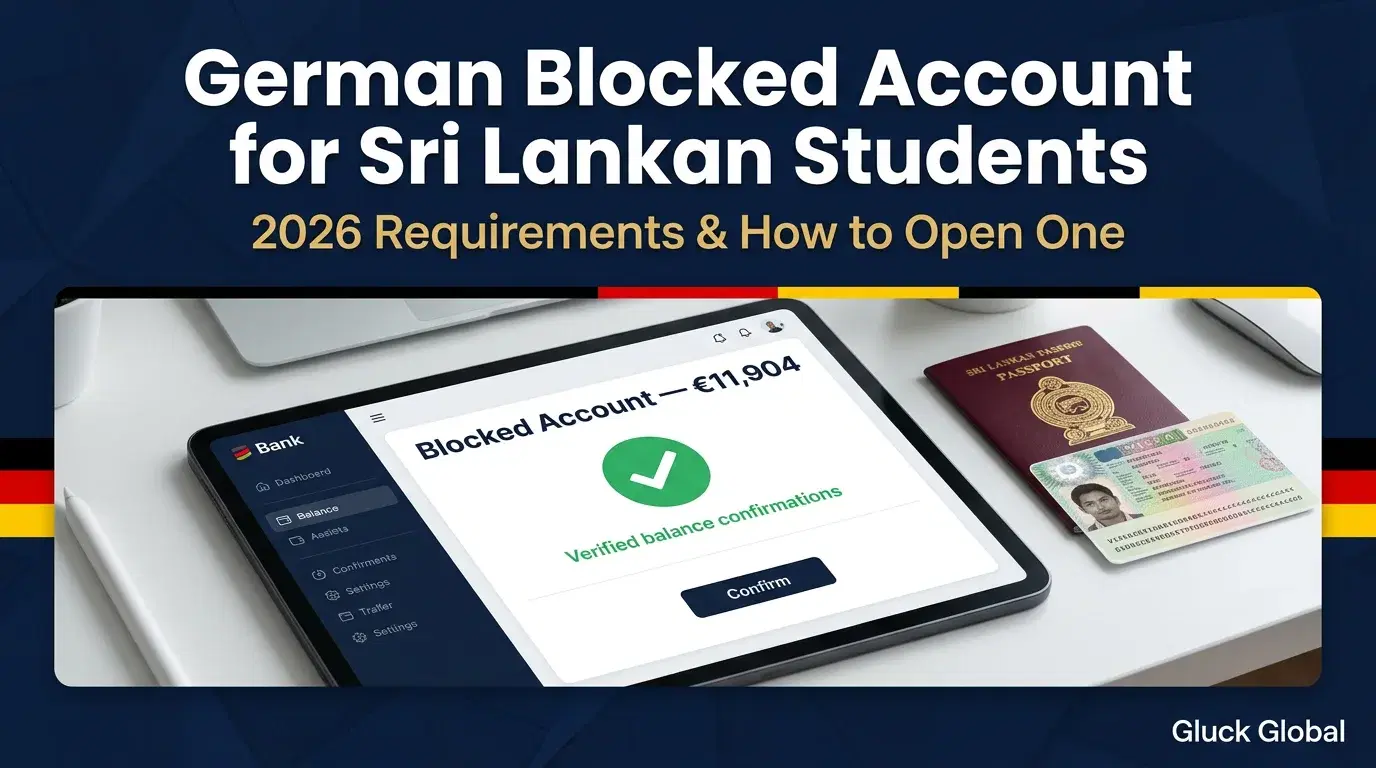
The German government itself sets a benchmark you cannot ignore: students must prove roughly €11,904 per year in a blocked account, which works out to about €992 per month. That figure is not random — it is Germany’s official estimate of the minimum a single person needs. Treat it as your floor, not your target.
The real monthly cost of living in Germany for Sri Lankans, line by line#
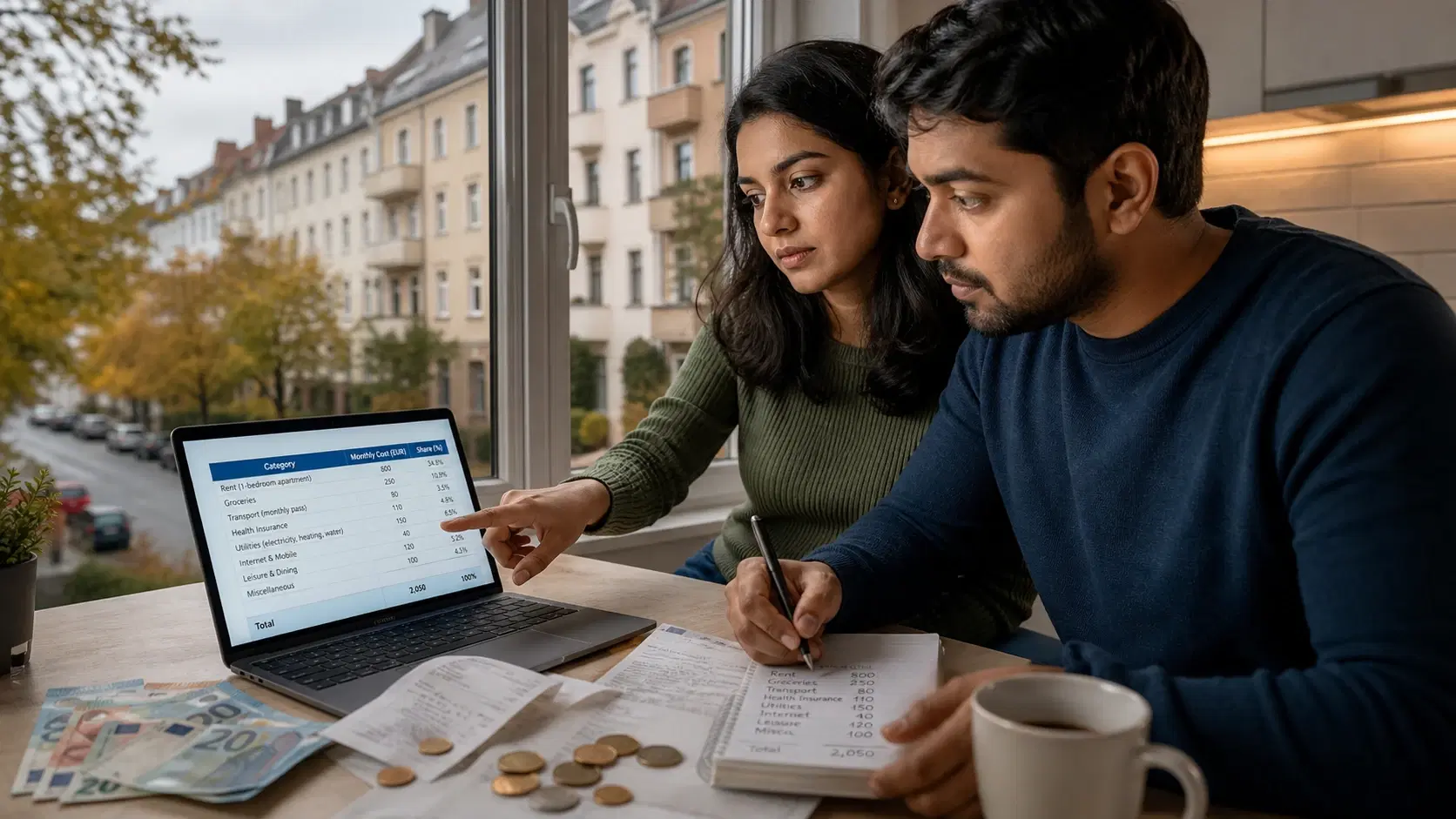
Here is a realistic single-person budget for a mid-sized German city in 2026. Big cities like Munich or Frankfurt run higher; smaller towns and eastern cities run lower.
| Expense | Monthly (€) | Approx. (Rs.) |
|---|---|---|
| Rent (shared / student room) | 350–550 | 125,000–196,000 |
| Health insurance | 120–130 | 43,000–46,000 |
| Food & groceries | 200–280 | 71,000–100,000 |
| Public transport | 0–60 | 0–21,000 |
| Phone & internet | 20–35 | 7,000–12,500 |
| Personal / misc. | 80–150 | 28,000–53,000 |
| Typical total | 770–1,205 | 275,000–430,000 |
Two lines surprise most Sri Lankans. First, health insurance is compulsory and non-negotiable — you cannot skip it, and public student insurance is around €120–130 a month. Second, many universities include a semester ticket in your fees, meaning your public transport can be effectively free once enrolled.
How the cost of living in Germany for Sri Lankans changes by city#
Rent is the single biggest swing factor. A shared room in Leipzig or Chemnitz might cost €300–400, while the same room in Munich easily hits €600–700. If your budget is tight, your city choice matters more than any other single decision. Sri Lankan students who pick smaller cities routinely save €150–250 a month — that is over Rs. 700,000 a year.
What you can earn to offset it#
You are not only spending — you can also earn. Students may work up to 20 hours per week during term, and Ausbildung trainees receive a monthly training allowance that rises each year. A student part-time job at €13–15 an hour can bring in €500–800 a month, which covers a large share of the budget above. The point is not to survive on scholarships alone; it is to build a plan where your income, savings and blocked account fit together.
How Glück Global helps you plan the real number#
We build a personalised cost-of-living plan for every family we work with, matched to the city and pathway you are targeting — not a generic printout. Our teaching model, native-standard German instruction, a dedicated student portal, and AI-assisted practice, is designed so you reach the language level Germany requires the first time, avoiding the hidden cost that ruins most budgets: repeating exams and losing a year.
The bigger picture#
Glück Global was on the ground at the Sri Lankan–German Business Forum 2026, held in Colombo from 27–29 May 2026 and organised by the Delegation of German Industry and Commerce (AHK Sri Lanka). The forum brought together German ministries, the DIHK, and Sri Lankan policymakers around one theme: deepening the people-and-skills bridge between the two countries. That is the ecosystem Glück Global operates inside every day.
Reference: Sri Lankan–German Business Forum 2026
Frequently Asked Questions#
Common questions from Sri Lankan readers on this topic.
Q1. Is the cost of living in Germany for Sri Lankans really over Rs. 400,000 a month?
In an average city, a careful single person spends around €770–1,000 (roughly Rs. 275,000–360,000). The higher end reflects big cities and comfortable spending. Sharing accommodation and choosing a smaller city keeps you at the lower end.
Q2. How much money do I need to show for a student visa?
Germany requires around €11,904 for one year in a blocked account, released to you at roughly €992 per month once you arrive. This is the official 2026 figure and applies regardless of nationality.
Q3. Can I actually cover my living costs by working in Germany?
Partly. Students can work 20 hours a week during term, and Ausbildung trainees earn a monthly allowance. Many students cover 50–80% of their living costs this way, but you should never plan to cover 100% from work alone.
Q4. Which German cities are cheapest for Sri Lankan students?
Eastern and smaller cities such as Leipzig, Dresden, Chemnitz and Magdeburg are consistently cheaper for rent, which is your biggest expense. Munich, Frankfurt and Hamburg are the most expensive.
Q5. Does health insurance really cost that much every month?
Yes. Health insurance is compulsory in Germany. Public student insurance is about €120–130 per month. It is not optional and you cannot enrol or get a residence permit without it.
Q6. How can I keep the cost of living in Germany for Sri Lankans as low as possible?
Share accommodation, choose a mid-sized city, use your semester transport ticket, cook at home, and — most importantly — pass your German exams the first time so you never pay for a repeat year abroad.
About Glück Global#
Glück Global helps Sri Lankan students and professionals reach Germany with confidence. Our German language programme uses native-standard teaching, a dedicated student portal, and AI-assisted practice designed for high first-time pass rates — so you clear the exact level Germany requires without losing a year to repeats. Through our recruitment side, we connect prepared candidates to real German employers.
Ready to start your Germany pathway? Contact Glück Global today to book your free consultation.