World-Class & Tuition-Free: 5 Strategic Reasons to Get Your Degree in Germany

- gluck global
- Nov 25, 2025
- 5 min read
Updated: Nov 26, 2025
Why Smart Professionals Choose to Get Your Degree in Germany
In a world where higher education often comes with a crippling price tag, one nation stands out as an anomaly. While students in the UK, USA, and Australia graduate with mountains of debt, students in Germany graduate with world-class credentials and a bank account that remains in the black.
Germany has quietly become the top non-English speaking destination for international students, and for good reason. It offers a rare combination of high academic rigor, economic stability, and an almost non-existent tuition cost. If you are a student or professional in Sri Lanka looking for a global career, the decision to get your degree in Germany is not just an educational choice; it is a strategic financial investment.
Here are the top 5 reasons why Germany should be your number one study abroad destination.
1. The Financial Miracle: $0 Tuition Fees at Public Universities
The most compelling reason to study in Germany is simple: Public universities do not charge tuition fees for Bachelor’s and most Master’s degree programs. This applies to international students just as it does to domestic German students.
How is this possible? The German government views education not as a commercial product, but as a public good and a pillar of their economic stability. They invest heavily in higher education to ensure a highly skilled workforce. Instead of paying €20,000 or €30,000 a year as you might in other Western countries, you only pay a nominal Semester Contribution (Semesterbeitrag). This usually ranges between €150 and €350 per semester.
Interesting Fact
Your Semester Contribution often includes a "Semester Ticket." This pass grants you free access to all public transportation (buses, trams, and trains) within your university state for the entire six months. Essentially, your "tuition" is just a pre-payment for your travel expenses, making the education effectively free.
2. "Made in Germany": A Seal of Quality for Your Resume
When you get your degree in Germany, you are attaching your name to a brand that is globally synonymous with engineering excellence, precision, and innovation.
German universities are divided into two main categories, both offering distinct advantages:
Universitäten (Universities): These focus on theoretical knowledge and research. They are ideal if you plan to pursue a PhD or a career in academia/research.
Fachhochschulen (Universities of Applied Sciences): These are the hidden gems for career-oriented students. Their curriculum is strictly practical. Professors here must have industry experience, and students often spend semesters working in partner companies.
This dual system ensures that whether you are studying Mechanical Engineering, IT, or Business Management, you are learning the most current, industry-relevant standards.
Interesting Fact
Germany is home to the TU9, an alliance of nine leading Technical Universities (including TU Munich and RWTH Aachen). These institutions are responsible for a massive portion of Germany's engineering outputs and maintain direct pipelines to employers like BMW, Siemens, and Bosch.
How to Get Your Degree in Germany and Launch a Global Career
The ultimate goal of studying abroad is not just the diploma; it is the career that follows. Germany does not just educate you; it wants to keep you.
3. The Post-Study Work Visa: A Clear Path to Residency
Unlike other nations that require you to leave immediately after graduation, Germany invites you to stay. The immigration laws are specifically designed to retain the talent cultivated in their universities.
Upon graduating from a German university, you are eligible for an 18-month Job Seeker Visa. This gives you a year and a half to find a job related to your field of study. Once you secure that job, you can convert your visa into a Residence Permit for employment or an EU Blue Card.
Furthermore, graduates from German universities have a fast track to Permanent Residency (Niederlassungserlaubnis). You can apply for permanent residency after working in a qualified job for just two years, compared to the standard five years required for others.
Interesting Fact
Germany is currently facing a massive skilled labor shortage, particularly in STEM fields (Science, Technology, Engineering, Mathematics) and Healthcare. The government recently passed the new Skilled Immigration Act, making it easier than ever for qualified graduates to settle. You are not competing for jobs; you are filling a desperate gap in the market.
4. English-Taught Programs are on the Rise
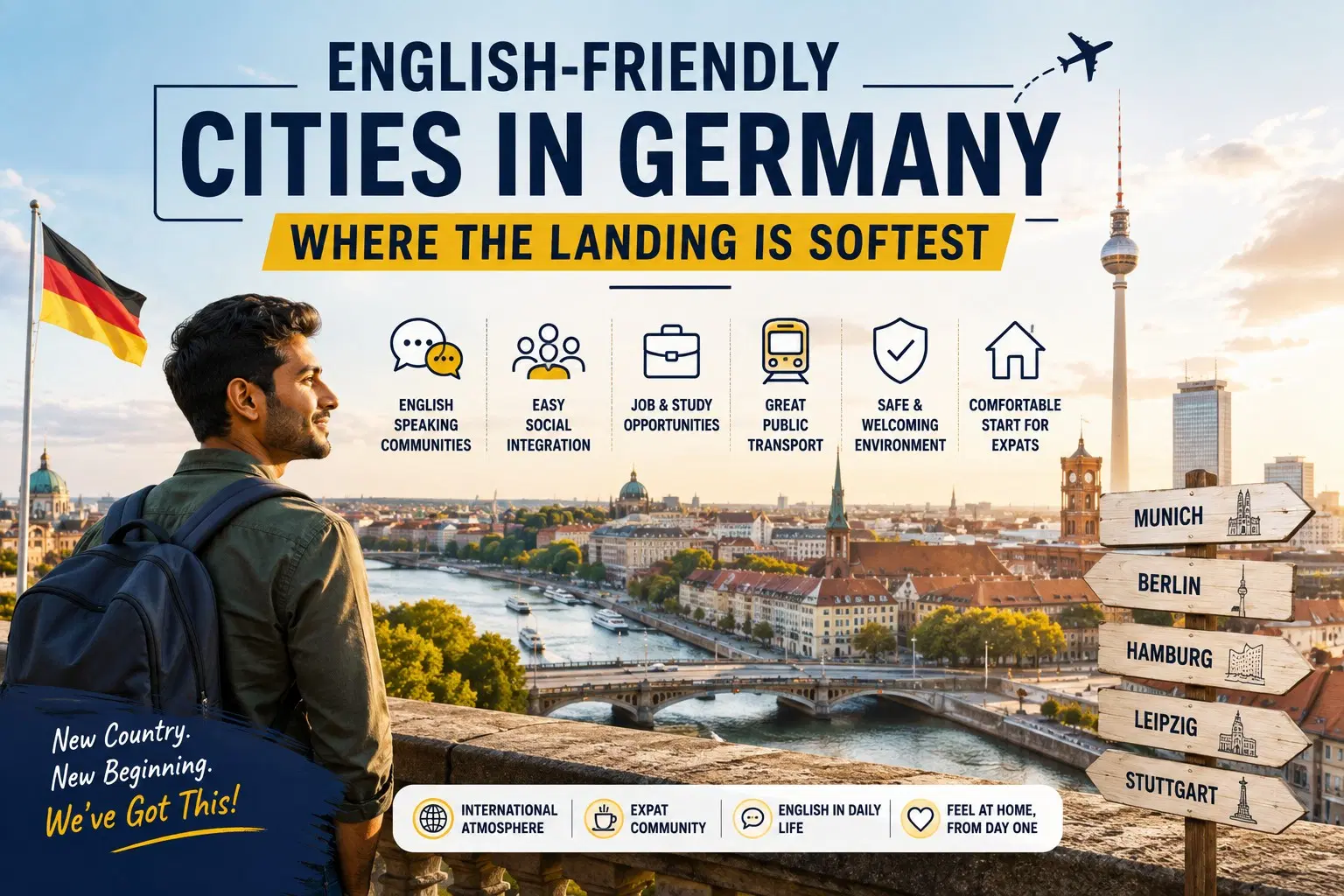
A common misconception is that you must be fluent in German to study there. While learning the language is crucial for your social life and long-term career, it is not always a barrier to entry for your degree.
German universities have recognized the need to attract global talent. Consequently, there has been a surge in International Degree Programs (IDPs) taught entirely in English. This is particularly true for Master’s degrees in Engineering, Computer Science, Business, and Natural Sciences. You can attain a world-class Master's degree without having spoken a word of German in a classroom.
Interesting Fact
There are currently over 2,000 degree programs taught in English across Germany. However, competition for these specific seats is high. This makes your application strategy critical. While you study in English, we highly recommend taking A1/A2 German classes concurrently to help you navigate daily life at the supermarket or the Ausländerbehörde (Foreigners Office).
5. The Heart of Europe: Lifestyle and Travel
When you get your degree in Germany, you aren't just studying in one country; you are gaining access to the entire European continent.
The Deep Dive
Germany shares borders with nine other countries. With your German student visa, you have Schengen Area freedom. This means you can spend your weekends in Paris, your semester breaks in Italy, and your holidays in the Swiss Alps—all without applying for extra visas.
The cost of living in Germany is also surprisingly affordable compared to its neighbors. Cities like Berlin, Leipzig, and Dresden offer a high quality of life with rent and food costs that are significantly lower than London, Paris, or New York.
Interesting Fact
Germany has a unique cultural concept called Feierabend (celebration evening), which refers to the time after work or study when you disconnect and relax. The culture heavily prioritizes work-life balance, ensuring that as a student, you have time to enjoy the vibrant student cities, historic sites, and vast green parks.
Prerequisites: Do You Qualify?
Now that you understand the massive benefits, you are likely wondering about the eligibility criteria. The requirements to enter a German university can be strict, involving your A-Level results, potential Studienkolleg (preparatory college) attendance, and language certifications.
We have broken down the exact academic and financial requirements in our detailed guide. [Read Now: The Complete Requirements to Study in Germany from Sri Lanka] (Link to your existing requirements blog)
Conclusion: Your Future Starts Here
Germany offers a unique proposition: prestigious education, financial accessibility, and a stable career path in Europe’s strongest economy. It is a challenge, yes, but the return on investment is unmatched.
If you are ready to take the next step and get your degree in Germany, you don't have to navigate the complex bureaucracy alone.
At Gluck Global, we specialize in:
University Admissions: finding the right English or German-taught program for you.
German Language Training: taking you from A1 to B2 with our expert tutors.
Visa Guidance: ensuring your blocked account and paperwork are flawless.
A2 Exam to Interview: We Rebuilt His Study Career in Germany.
Contact us today to schedule your free counseling session and start your journey to the heart of Europe.


Comments