Ausbildung vs Work Visa 2026: Which Path Gets You to Germany Faster?
Comparing Ausbildung vs work visa 2026? Discover the fastest route to Germany with our 2026 guide on processing times, Blue Cards, and vocational training hacks.
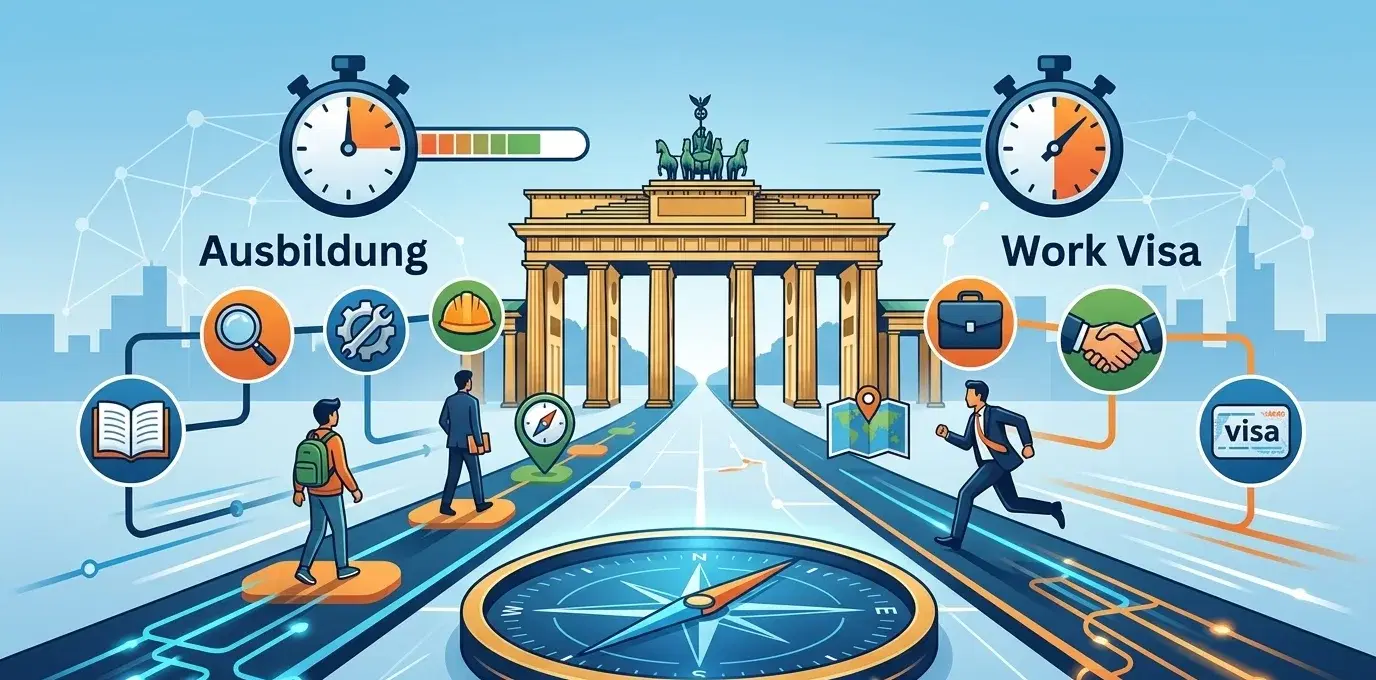
Germany is currently facing a labour shortage of nearly 400,000 workers annually. To fix this, the 2026 immigration landscape is built for speed. However, “speed” is relative. Are we talking about the time it takes to get the visa stamp - or the time it takes to become a fully integrated, high-earning resident? When comparing Ausbildung vs work visa 2026, both questions matter, and the answers are more nuanced than most migration guides admit.
The Ausbildung Route: The “Learn-as-You-Earn” Sprint#
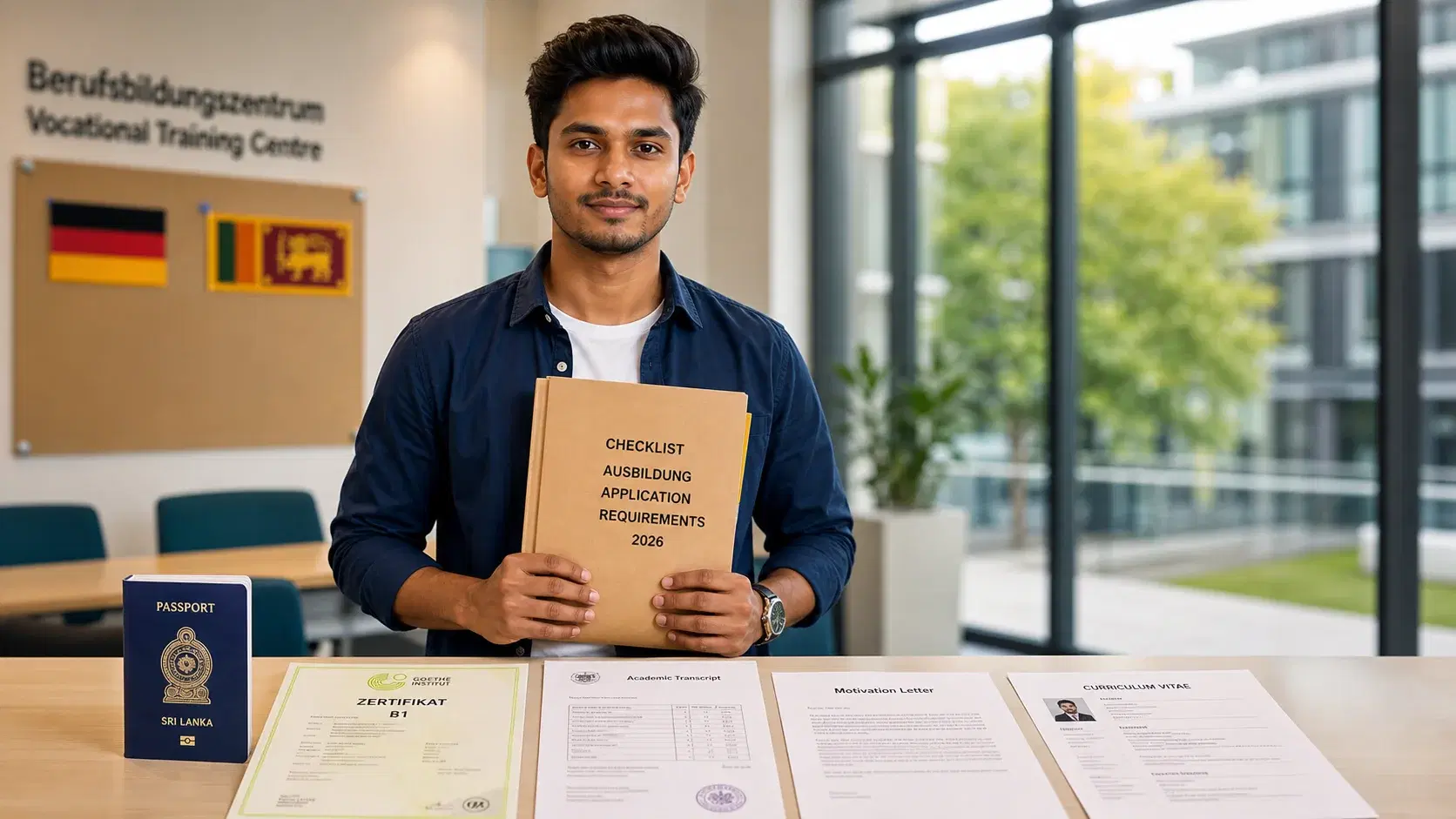
For many, the Ausbildung (dual vocational training) is the most attractive entry point. You do not need a university degree, and you get paid while you learn. But is it fast?
1. Processing Timelines in 2026
In 2026, the standard processing time for an Ausbildung visa at most German embassies ranges from 8 to 12 weeks. However, there is a “cheat code” called the Fast-Track Procedure for Skilled Workers (Section 81a of the Residence Act). If your German employer is desperate for trainees - which most are - they can apply for this procedure locally in Germany. This can slash your visa processing time to just 2 to 3 weeks. ### 2. The Language Bottleneck While the visa itself might be fast, the preparation is where most people lose time. For an Ausbildung, you typically needB1 level German. Unless you are already a polyglot, reaching B1 usually takes 6–9 months of intensive study. In the context of the Ausbildung vs work visa 2026comparison, the Ausbildung is “slower” if you are starting your language journey from zero. ### 3. Financial Requirements One major speed factor in 2026 is the blocked account ( Sperrkonto). If your Ausbildung salary falls below the federal requirement of approximately**€990 per month gross**, you must prove you have the remaining funds in a blocked account. Setting this up is now fully digital, but the funds must be in place before your visa appointment.
The Work Visa Route: The “Qualified Professional” Jump#
The traditional work visa has been largely overtaken by the EU Blue Card and the Skilled Worker Visa. In 2026, these are arguably the fastest ways into the country - if you already have the right qualifications.
1. The EU Blue Card - The Gold Standard
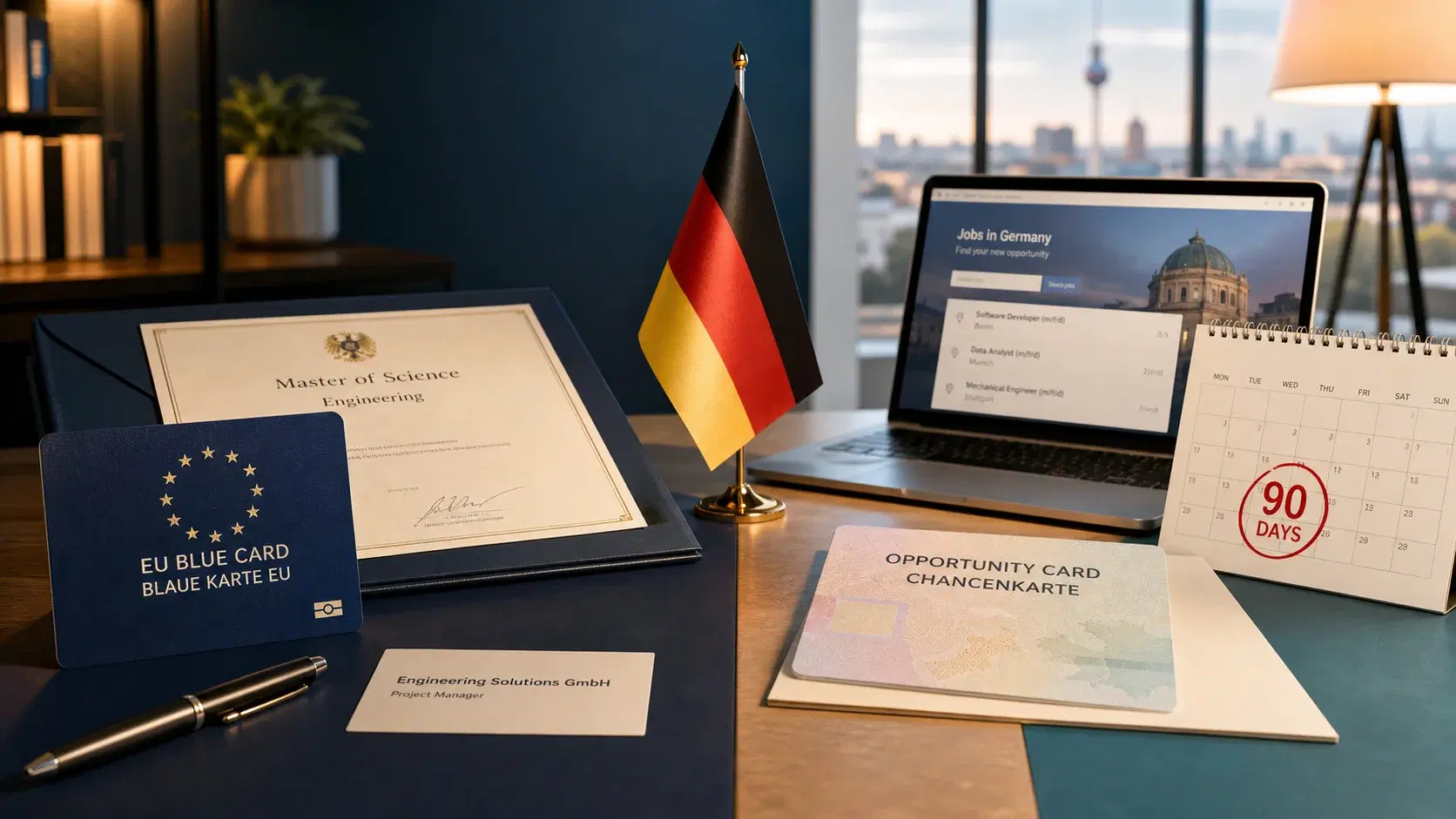
If you have a recognised degree and a job offer meeting the 2026 salary threshold (approximately €50,700 for standard roles or €45,934 for shortage occupations such as IT and healthcare), the Blue Card is the fastest available route. With the new Consular Services Portal, many Blue Card applications are now processed in as little as 15 days.
2. The Opportunity Card (Chancenkarte)
Launched a few years ago and now fully optimised in 2026, the Chancenkarte allows you to enter Germany without a job offer and search for work for up to one year.
- Speed: approximately 4–8 weeks to process
- The catch: you need a minimum of 6 points based on age, language proficiency, and professional experience
- Pro tip: if you hold a recognised degree, you bypass the points system entirely - making this an incredibly fast backup work visa for qualified professionals
3. Recognition Partnerships
A significant new feature of the Ausbildung vs work visa 2026 landscape is the Recognition Partnership. This allows you to enter Germany and start working before your foreign degree is fully recognised. You and your employer simply agree to complete the recognition process after you arrive - removing the 6-month wait time that previously plagued skilled worker applications.
Speed Comparison: Side-by-Side#
| Feature | Ausbildung (Vocational) | Work Visa / Blue Card |
|---|---|---|
| Visa Processing | 2–3 weeks (Fast-Track) / 8–12 weeks standard | 15 days – 6 weeks |
| Language Needed | B1 German (required) | A1/B1 or English (depends on visa type) |
| Job Offer Required? | Yes - training contract | Yes, except Opportunity Card |
| Degree Required? | No | Yes (EU Blue Card / §18b) |
| Paid During Training? | Yes - €900–€1,350/month | Full salary from Day 1 |
| PR Pathway | 2 years after graduation | 21–33 months (Blue Card) / 5 years (standard) |
| Overall Speed Assessment | Moderate (language prep is the main delay) | Fast (if fully qualified and offer in hand) |
Why “Faster” Does Not Always Mean “Better”#
When weighing Ausbildung vs work visa 2026, do not just look at the calendar.
If you take a work visa because you found a quick unskilled job - such as through the Western Balkans Regulation pathway - you are tied to that employer and your path to Permanent Residency is typically 5 years.
If you take the Ausbildung path, even though the training itself takes 3 years to complete, you are practically guaranteed a high-paying, qualification-matched job at the end. You can then apply for Permanent Residency just 2 years after finishing the training- particularly fast in shortage occupations like nursing, mechatronics, and IT. In the long run, the Ausbildung may actually be the faster way to permanently secure your life in Europe. ## The 2026 Digital Advantage Regardless of which pathway you choose, theConsular Services Portal is your best friend in 2026. Almost all documents - from your Ausbildungsvertrag (training contract) to your university transcripts - are now uploaded and pre-verified online before your visa appointment. This has cut preparation time and eliminated many of the administrative bottlenecks that delayed applications in previous years.
A word of caution: Do not fall for agencies promising 24-hour visa turnarounds. Even in 2026, the Federal Employment Agency (BA) still conducts a manual check to confirm that your work or training conditions are fair and legally compliant.
So - Ausbildung vs Work Visa 2026: Which One Is Right for You?#
The honest answer is: it depends entirely on your starting point.
| Your Profile | Recommended Pathway |
|---|---|
| No university degree; O/A-Level qualified; willing to learn German | Ausbildung (Nursing, IT Specialist, Mechatronics) |
| University degree; recognised in Germany; German or English proficient | EU Blue Card or §18b Skilled Worker Visa |
| University degree; no job offer yet; want to search from Germany | Opportunity Card (Chancenkarte) |
| Young; want paid training; prefer not to borrow money for education | Ausbildung - stipend covers living costs from Month 1 |
| High earner in current role; degree in IT, engineering, or healthcare | EU Blue Card - fastest PR timeline at 21 months |
How Glück Global Supports Both Pathways#
Navigating the Ausbildung vs work visa 2026landscape does not have to be a solo mission. At Glück Global, we specialise in turning your German ambitions into a structured, achievable plan: - Free eligibility assessment - we evaluate your profile against both pathways and identify which one gets you to Germany fastest based on your specific qualifications and timeline - German language training (A1 to B2) - live online classes structured around your target level for the visa you are applying for; Goethe and TELC exam preparation included - Credential recognition and ZAB management - complete handling of the Anabin check and ZAB Statement of Comparability process - Ausbildung employer matching - we connect you with verified German training hospitals and companies actively recruiting international candidates - EU Blue Card and Skilled Worker Visa preparation - end-to-end visa documentation, including salary threshold verification and employment contract review - Post-arrival support - Anmeldung, health insurance, bank account setup, and your first weeks in Germany fully guided > Do not let 2026 pass you by. Whether the Ausbildung or the work visa is right for you, the first step is the same: start today. Book your free eligibility consultation with Glück Global → ## Frequently Asked Questions ### Is the Ausbildung or the EU Blue Card faster for Permanent Residency in Germany? The EU Blue Card offers a faster timeline to PR - 21 months with B1 German. However, it requires a university degree and a qualifying salary offer above ~€45,934–€50,700. The Ausbildung PR timeline is 2 years of qualified work after completing the 3-year training - making the total journey around 5 years. For candidates without a degree, the Ausbildung is the only fast PR pathway available. ### Do I need a job offer for both the Ausbildung and work visa? Yes for both - with one exception. The Ausbildung requires a signed training contract with a German employer. The EU Blue Card and Skilled Worker Visa require a job offer. The only pathway that does not require a prior offer is theOpportunity Card (Chancenkarte), which lets you enter Germany to search for work on the ground.
What German level do I need for an Ausbildung vs a work visa?
Ausbildung: B1 German is the standard minimum; B2 is strongly preferred by most employers, and non-negotiable for nursing. Work visa (§18b / EU Blue Card): German is not legally required for the visa itself, but B1 is needed for the 21-month PR fast-track. Chancenkarte: A1 German is the minimum to apply; B2 earns maximum language points. In all cases, higher German equals faster and stronger outcomes.