The 2026 Salary Guide: Top 5 High-Paying Jobs in Germany for Sri Lankans
Discover the top 5 high paying jobs in Germany for Sri Lankans in 2025. From IT to Nursing, see the salary rates and visa requirements for your next career move.

Germany is undergoing a massive transformation - economically and demographically. As Europe's largest economy and one of the world's most chronic labour shortage markets, the demand for skilled foreign workers has never been higher. This is not just a trend - it is official government policy, exemplified by the Opportunity Card (Chancenkarte) and a reformed Skilled Immigration Act designed to bring international talent in faster than ever before.
For skilled professionals from Sri Lanka, this is a unique, time-sensitive opening. While the journey requires commitment - particularly in language training and documentation - the reward is access to some of the highest and most stable salaries in the world. The crucial question is: What is your true earning potential? This guide answers it.
Top 5 High Paying Jobs in Germany for Sri Lankans - 2026 Salary#
Overview
| Job Role | Avg. Gross Salary (Per Year) | German Level Required | Key Challenge |
|---|---|---|---|
| 1. Senior Nursing Professionals | €38,000 – €52,000 | B1 / B2 (Mandatory) | Qualification Recognition (Anerkennung) |
| 2. IT Specialists & Developers | €55,000 – €80,000 | English (A1/A2 German helps) | High competition for English-speaking roles |
| 3. Engineering (Civil/Mech/Elec) | €50,000 – €75,000 | B2 (Highly Recommended) | Industry-specific German vocabulary |
| 4. Craftsmen & Technical Trades | €35,000 – €48,000 | B1 | Vocational training accreditation |
| 5. Medical Doctors (Specialists) | €70,000 – €100,000+ | C1 (Medical German) | Licensing and lengthy approval process |
1. Senior Nursing Professionals - €38,000 to €52,000#
The German healthcare system is ageing, and the demand for qualified nurses is critical. For Sri Lankan nurses with a B.Sc. in Nursing, this is arguably the most secure career path in Germany. Hospitals are often motivated enough to offer integration programmes and subsidise German language training as part of your onboarding.
- Why the salary is high - shift work, ICU and anaesthesia specialisation bonuses, and regional premiums drive compensation up. A senior nurse in a major hospital can comfortably reach €50,000
- The recognition hurdle - the primary challenge is having your Sri Lankan qualification recognised through * Anerkennung*. This process requires precise documentation and sometimes a compensatory adaption course completed in Germany. Careful preparation here is non-negotiable
2. IT Specialists and Software Developers - €55,000 to €80,000#
In major tech hubs like Berlin, Munich, and Hamburg, the language of code is English. This makes the IT sector one of the most accessible high-paying jobs in Germany for Sri Lankans who want to move quickly without needing to reach B2 German first.
- Why the salary is high - specialisations in Cloud Architecture, AI, SAP, and Full-Stack Development command premium pay. Senior and lead developers frequently exceed €80,000
- Language tip - while the code is English, team meetings and company culture are often in German. Securing at least A1 or A2 before you arrive makes you a significantly more competitive candidate and is essential for daily life outside the office
3. Engineering - Civil, Mechanical, Electrical - €50,000 to €75,000#
The German manufacturing and construction industries are the backbone of the economy. Engineers are consistently in demand to maintain and advance this massive industrial infrastructure.
- Why the salary is high - German companies place enormous value on precision and stability. Engineers with niche skills in automation, renewable energy, and quality assurance are exceptionally well-compensated
- Location matters - salaries are highest in the southern states (Bavaria and Baden-Württemberg), home to major automotive and technology firms including BMW, Audi, and Siemens
4. Craftsmen and Technical Trades - €35,000 to €48,000#
The most overlooked sector - and one of the most reliable. Germany is critically short of certified tradespeople including electricians, HVAC technicians, and specialist welders.
- Why the salary is high - low domestic supply and extreme demand. An experienced Master Craftsman (Meister) can earn more than many entry-level engineers. This is one of the most consistently high-paying jobs in Germany for Sri Lankans with vocational training
- The pathway - if you hold vocational training and relevant experience, you can apply for the Skilled Worker Visa and have your certification recognised through a process that is faster than a full academic degree recognition
5. Medical Doctors and Specialists - €70,000 to €100,000+#
For established Sri Lankan doctors, the earning potential in Germany is exceptional. Once you achieve your German medical licence ( Approbation) and specialist recognition, salaries start high and grow rapidly.
- Why the salary is high - doctors are among the most highly respected and highly paid professionals in Germany. Surgical, anaesthesiology, and radiology specialists are consistently among the highest earners in the country
- The challenge - the language requirement is steep (C1 German plus the Medical Language Exam, Fachsprachenprüfung), and the licensing process is rigorous. The investment of time and effort is, however, well justified by the long-term financial and professional rewards
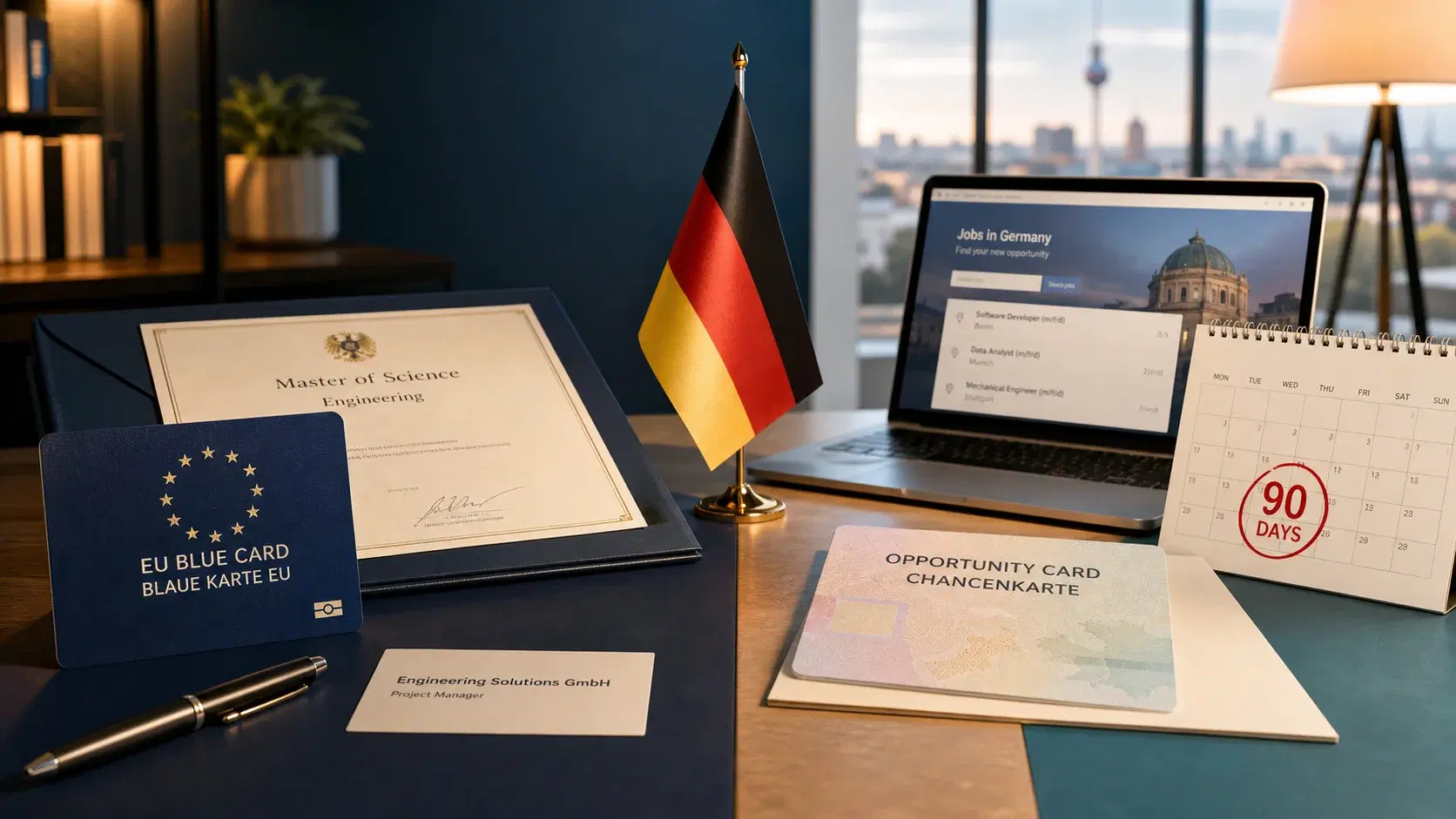
The Visa Gateway: The Chancenkarte (Opportunity Card)#
The German government introduced the Chancenkarte to remove one of the biggest barriers in international recruitment - the requirement to have a job offer before you can even enter Germany. Instead, the Opportunity Card uses a points-based system that allows you to move to Germany for up to one year to search for a qualified role on the ground.
- Minimum 6 points required - earned through a combination of qualifications (degree or vocational training), German or English language skills, professional experience, and personal ties to Germany
- Part-time work permitted - up to 20 hours per week while you search, allowing you to earn and cover living costs during the job-seeking period
- Financial proof required - approximately €13,092 in a blocked account for the first year
Understanding Your Payslip: The Brutto vs. Netto Reality#
When comparing salaries, you must understand the difference between Brutto (gross) and Netto (net). A gross salary of €60,000 is excellent - but after deductions of approximately 35–40%, your take-home figure is significantly lower. These deductions are not lost money - they fund your security net:
- Health Insurance (Krankenversicherung) - comprehensive medical coverage for you and dependants
- Pension (Rentenversicherung) - state pension contributions toward your retirement
- Unemployment Insurance (Arbeitslosenversicherung) - financial protection if you lose your job
- Care Insurance (Pflegeversicherung) - coverage for long-term personal care needs
Tax Class Matters
Your net salary also depends on your tax class (Steuerklasse). Single earners fall into Tax Class 1 - the highest deductions. Married couples where one partner earns more can apply for Tax Class 3, which significantly reduces monthly deductions. Understanding your tax class before you arrive helps you budget accurately.
Three-Step Roadmap to Qualifying for High Paying Jobs in Germany#
Step 1: Master the Language
Language proficiency is the single biggest accelerator for your career, your salary, and your social integration in Germany.
- Skilled Worker and IT roles - B1 or B2 is strongly recommended; even where English is accepted for the visa, German is the key to career progression
- Medical and teaching roles - C1 German is often a legal mandatory requirement, not a preference
- Recognised exams - Goethe-Zertifikat, TELC, or ÖSD; all are internationally valid. Glück Global prepares you for these from A1 to B2 in live online classes taught in Sinhala, Tamil, and English
Step 2: Qualification Recognition (Anerkennung)
Germany must officially verify that your Sri Lankan degree or vocational certificate is equivalent to the German standard. This is the most time-consuming step in the process - and any single missing or incorrect document can halt the assessment for months.
- Academic degrees - assessed through the ZAB (Central Office for Foreign Education) database or Uni-Assist
- Vocational qualifications - assessed through the IHK FOSA or the relevant professional chamber
- EU Blue Card shortcut - for roles earning above €45,300 in certain shortage professions, the Blue Card offers a fast-tracked recognition process
Step 3: Secure the Right Visa
With your qualification recognised and your language certificate in hand, the final step is choosing the correct entry pathway:
- Skilled Worker Visa (§ 18a) - standard route requiring a recognised degree and a signed job offer
- EU Blue Card - for degree holders with offers above the salary threshold; fastest path to permanent residency (21 months with B1 German)
- Opportunity Card (Chancenkarte) - for qualified professionals who want to job-search on the ground in Germany without a prior contract
How Glück Global Guides You to a High-Paying German Career#
- German language training (A1 to B2) - live online classes structured for your visa timeline and target exam
- Qualification recognition management - complete Anerkennung handling from document review to authority submission
- Job placement - direct employer connections in healthcare, IT, engineering, hospitality, and skilled trades
- Visa documentation and embassy preparation - certified translations, document review, and embassy appointment coaching in Colombo
The candidates who succeed are the ones who start preparing early. Don't just dream about a better salary - take action. Contact Glück Global for a free consultation →
Frequently Asked Questions#
What is the highest paying job in Germany for Sri Lankan
professionals?
Medical specialists (doctors) have the highest earning ceiling - €70,000 to €100,000+ gross per year. However, this pathway requires C1 German and a rigorous licensing process. For faster access to high salaries, IT Specialists and Software Developers (€55,000–€80,000) are the most accessible high-earner route, with English accepted for many roles at the visa stage.
What does Brutto vs. Netto mean on a German payslip?
Brutto is your gross salary before deductions. Netto is your take-home pay after deductions of approximately 35–40% for health insurance, pension, unemployment insurance, care insurance, and income tax. These deductions fund world-class social security benefits - including free healthcare and a state pension. Your exact Netto figure depends on your tax class and health insurance provider.
Do I need German to qualify for high paying jobs in Germany as a Sri
Lankan?
It depends on your sector. IT roles are the most English-friendly - many employers accept English for the visa and workplace. For nursing, trades, and engineering, B1–B2 German is strongly recommended and in many cases legally required for qualification recognition. For medical doctors, C1 German is mandatory. Glück Global recommends beginning language training as early as possible regardless of your sector - B1 German specifically accelerates the EU Blue Card permanent residency timeline.