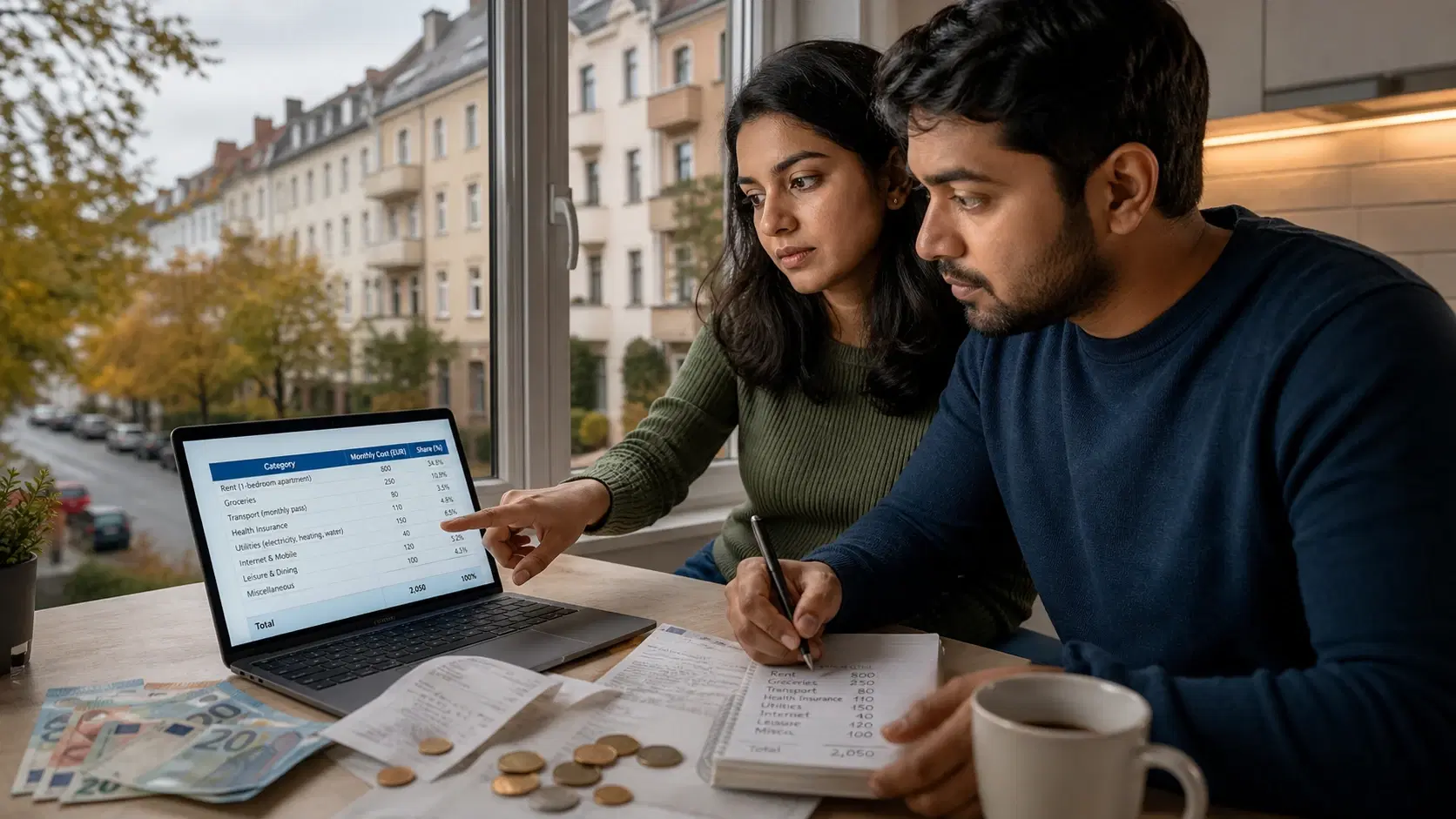
Germany vs UK for Sri Lankan Students: The Honest 2026 Comparison
Germany vs UK for Sri Lankan students in 2026: tuition, living costs, work rights, and post-study stay compared side by side to help you choose.
Germany vs UK for Sri Lankan students: the question behind the question#
Almost every Sri Lankan family weighing an overseas education eventually lands on the same fork in the road: Germany vs UK for Sri Lankan students. Both are respected, both have strong universities, and both have big Sri Lankan communities. But they are built on completely different money logic — and choosing the wrong one can cost your family tens of lakhs. This is an honest, number-first comparison, without the marketing spin.
The single biggest difference is tuition. Most public universities in Germany charge little to no tuition fees, even for international students — you typically pay only a small semester contribution. UK universities, by contrast, charge international tuition that commonly runs into many thousands of pounds every year. Over a full degree, that gap alone can decide everything.
Germany vs UK for Sri Lankan students: the side-by-side#
| Factor | Germany | UK |
|---|---|---|
| Tuition (public universities) | Little to none + small semester fee | High international fees |
| Main teaching language | German (many Master’s in English) | English |
| Living cost | Moderate | High, especially London |
| Work while studying | Yes (limited hours) | Yes (limited hours) |
| Post-study stay | Strong pathways to work & residence | Graduate route (time-limited) |
| Long-term settlement | Clear skilled-worker & residence routes | Higher salary/visa thresholds |
Where the UK wins in the Germany vs UK for Sri Lankan students debate#
Be fair to the UK. It teaches in English, which removes the language barrier that stops many students from choosing Germany. Its degrees are globally recognised, its universities dominate world rankings, and for one-year Master’s programmes the UK is fast. If your budget is not the main constraint and English is your only strong language, the UK is genuinely attractive.
Where Germany wins#
Germany’s advantage is compounding. Low tuition means you graduate with little or no debt. A strong, aging economy means real demand for skilled workers, and the pathways from student to worker to permanent resident are clearer and cheaper than most alternatives. The catch — and it is a real one — is language. Undergraduate programmes are largely in German, and even English Master’s students need German to work and live comfortably.
The deciding factor is usually language, not preference#
When Sri Lankan families actually sit down and do the maths, Germany often wins on cost and long-term opportunity. The reason more do not choose it is simple: German feels like a barrier. That is a solvable problem, not a permanent wall. A student who commits to reaching B1–B2 German unlocks the cheaper, higher-opportunity path — and keeps the money that a UK degree would have consumed.
How Glück Global helps you choose — and win either way#
We do not push every student toward Germany. We help you compare honestly against your budget, career goal and language ability. For those who choose Germany, our native-standard German teaching, student portal and AI-assisted practice are built to get you to the required level the first time — turning the one real disadvantage of the German route into a strength.
The bigger picture#
Glück Global was on the ground at the Sri Lankan–German Business Forum 2026, held in Colombo from 27–29 May 2026 and organised by the Delegation of German Industry and Commerce (AHK Sri Lanka). The forum brought together German ministries, the DIHK, and Sri Lankan policymakers around one theme: deepening the people-and-skills bridge between the two countries. That is the ecosystem Glück Global operates inside every day.
Reference: Sri Lankan–German Business Forum 2026
Frequently Asked Questions#
Common questions from Sri Lankan readers on this topic.
Q1. Is Germany really cheaper than the UK for Sri Lankan students?
Yes, significantly. Most German public universities charge little to no tuition plus a small semester fee, while UK international tuition runs into thousands of pounds a year. Over a full degree the gap is very large.
Q2. Do I need German to study in Germany?
For undergraduate degrees, usually yes. Many Master’s programmes are taught in English, but even then you need German (ideally B1–B2) to work part-time, handle daily life and stay long-term.
Q3. Which is better for staying and working after graduation?
Germany generally offers clearer, more affordable pathways from student to skilled worker to permanent residence. The UK has a graduate route but with higher salary and visa thresholds.
Q4. Is the UK better because it teaches in English?
For students whose only strong language is English, the UK removes the language barrier. But you pay heavily for that convenience in tuition and living costs.
Q5. What is the biggest mistake in the Germany vs UK for Sri Lankan students decision?
Choosing the UK purely to avoid learning German, without doing the full cost comparison. German is a one-time investment; UK tuition is a recurring cost that can define your family finances for years.
Q6. Can Glück Global help me if I choose the UK?
Our core strength is preparing you for the German pathway, where language is the deciding factor. We will give you an honest comparison, but our programmes are built to make the German route succeed.
About Glück Global#
Glück Global helps Sri Lankan students and professionals reach Germany with confidence. Our German language programme uses native-standard teaching, a dedicated student portal, and AI-assisted practice designed for high first-time pass rates — so you clear the exact level Germany requires without losing a year to repeats. Through our recruitment side, we connect prepared candidates to real German employers.
Ready to start your Germany pathway? Contact Glück Global today to book your free consultation.