Sri Lanka to Germany 2026: Au Pair, Student, Ausbildung or Work Visa - Which Pathway Actually Fits?
Au Pair, Student, Ausbildung, or Work Visa from Sri Lanka in 2026 - pick the right pathway by age, education, German level, and budget. Honest comparison.
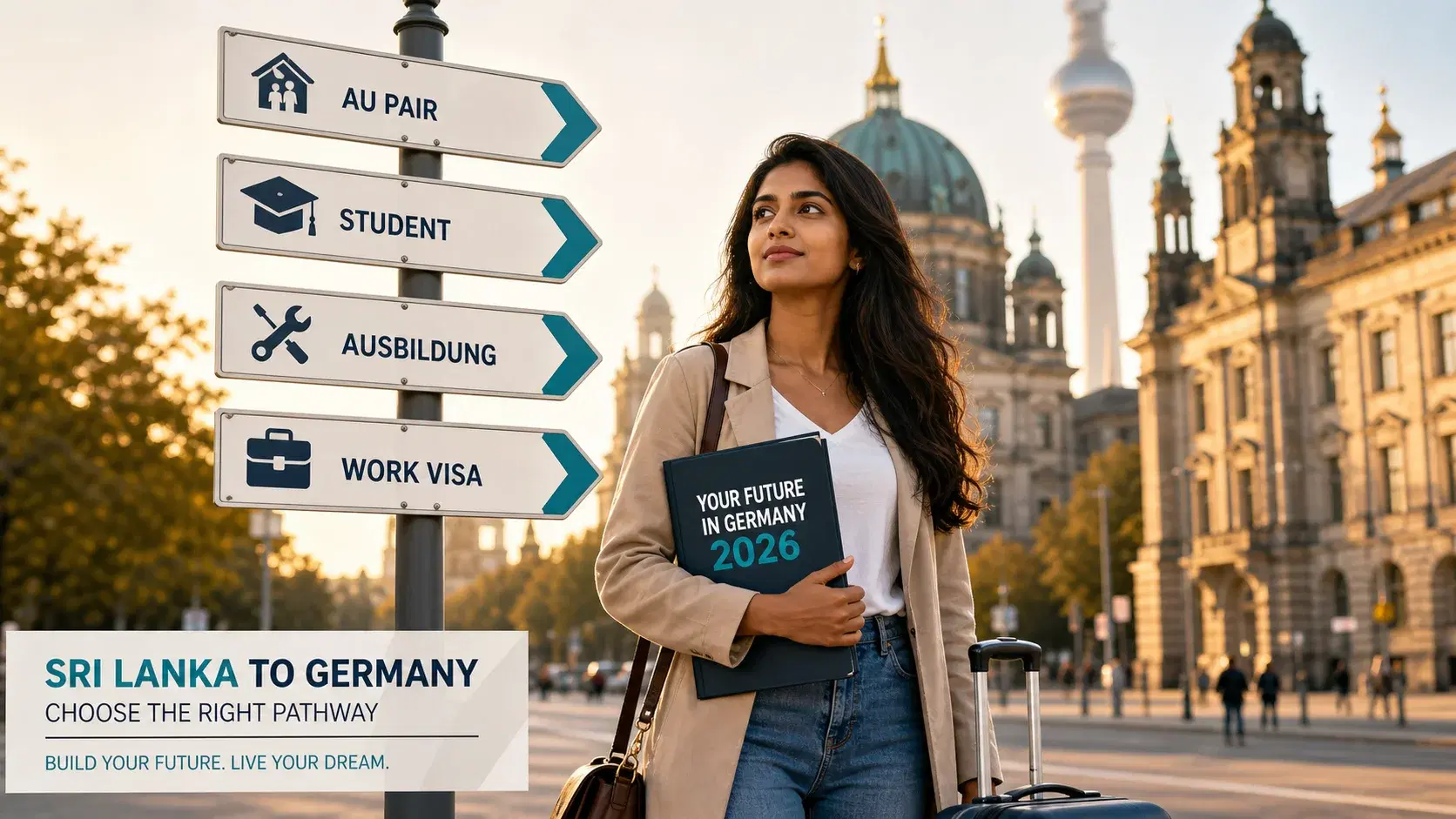
There is no single "Germany pathway." There are at least six distinct legal routes, each with different age limits, language thresholds, financial requirements, timelines, and long-term outcomes. Most Sri Lankans asking "how do I go to Germany?" are actually asking a more specific question - they just have not framed it yet. This guide frames it for you.
The Six Pathways at a Glance#
| Pathway | Age Limit | Min. German | Income / Cost | Lead Time | PR Eligible? |
|---|---|---|---|---|---|
| Au Pair | 18–26 | A1 | €280/month pocket money | 3–6 months | No (transition required) |
| Student Visa | No limit | B2–C1 (German-taught) or B2 English | €11,904 blocked account | 12–18 months | Yes (via 18-month job search) |
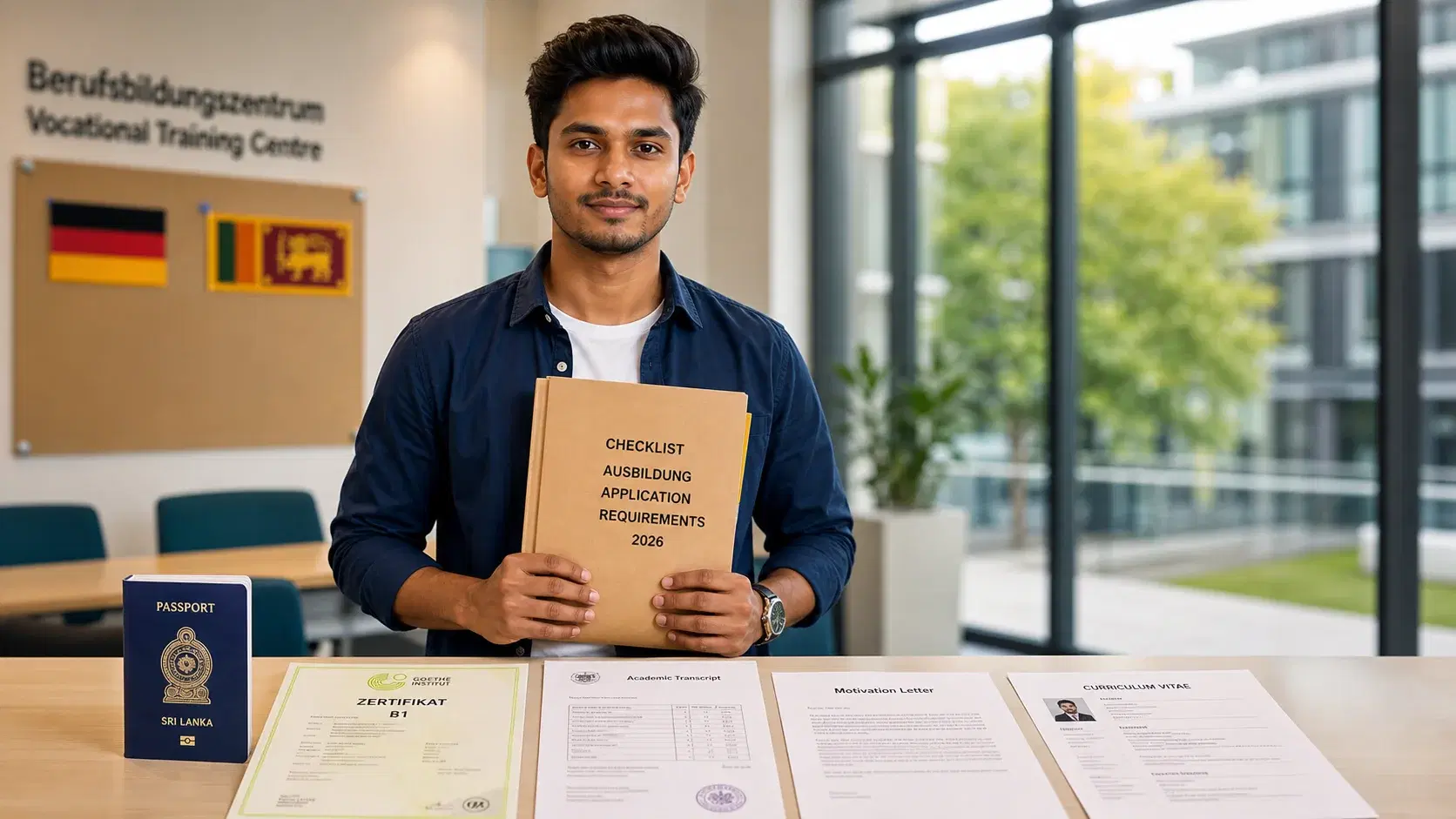
| Ausbildung | No federal limit (practical: 18–35) | B1 minimum | Earn €766–€1,500/month | 14–20 months | Yes (after 4 years) |
| Skilled Worker Visa | No limit | B1–B2 (role-dependent) | Employer-funded | 10–16 months | Yes (after 4 years) |
| EU Blue Card | No limit | None required (practical B2) | Min. €48,300/year job offer | 10–16 months | Yes (after 21 months) |
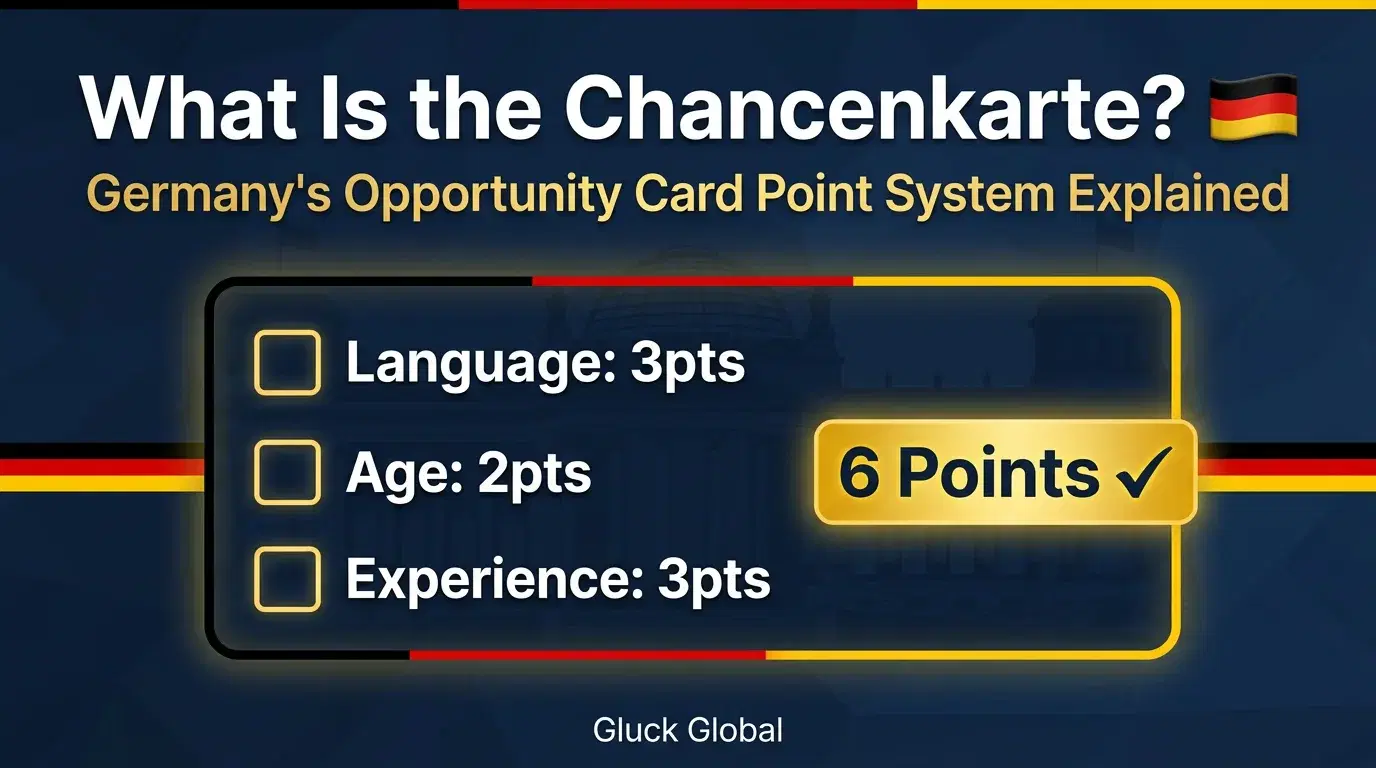
| Chancenkarte | No limit | A1 German or B2 English | €12,324 or income proof | 8–14 months | Yes (after job → work visa) |
Au Pair - The Fastest Entry, Smallest Footprint#
The au pair visa lets Sri Lankans aged 18–26 live with a German host family, provide childcare (up to 30 hours per week), and attend German language classes. You receive accommodation, meals, and pocket money of approximately €280/month. You attend a German course - typically A1 or A2 - during your stay.
Who it actually fits:
- Applicants under 26 who have minimal German, minimal funds, and want a legal first entry into Germany while learning the language
- Those using au pair as a bridge to Ausbildung - particularly in hospitality, eldercare, or childcare sectors
What it is not:
- A permanent or semi-permanent pathway on its own
- A route to residency without transitioning to another visa
- Suitable for applicants over 26 - the age cap is strict
The au pair pathway is underused by Sri Lankans precisely because it is not marketed as a migration route - it is used as one by thousands of South and Southeast Asian applicants in Germany every year.
Student Visa - Longest Timeline, Widest Range of Outcomes#
Germany's public universities charge no tuition. A Sri Lankan student pays €100–€400 per semester in administrative fees, holds a blocked account of €11,904 per year, and can work up to 120 full days per year. After graduation: an 18-month job search visa, then a full work permit.
Who it actually fits:
- A/L or degree holders with strong academic records aiming for engineering, IT, business, or medicine
- Families who can fund 14–18 months of German language training plus a blocked account before the first semester
- Sri Lankans who want a German qualification for global recognition - not just Germany employment
The honest challenge:
- Sri Lankan A/L does not qualify directly for German university - most candidates need Studienkolleg (one additional preparatory year)
- Total time from starting German at A1 to entering a Bachelor's semester 1: typically 26–32 months
- You fund your own living costs (€930–€1,200/month) for the full programme duration
Ausbildung - The Best Financial-to-Outcome Ratio for Most Sri Lankans#
Germany's dual vocational training system pays you to learn. You earn €766–€1,500/month from month one, hold a German qualification at the end, and have a direct route to employment, permanent residency, and eventually citizenship.
Who it actually fits:
- O/L or A/L holders aged 18–35 targeting nursing, IT, hospitality, trades, or eldercare
- Applicants without large upfront capital - no blocked account required if the salary meets the minimum subsistence threshold
- Families who want their child earning from the first year in Germany
What most people miss:
- B1 German is the minimum - in practice, B2 gives you 5× more employer options
- The training contract must be signed before the visa is applied for - so employer placement comes first, visa second
- August/September start dates mean applications must go in October–January the year before
Skilled Worker Visa - The Fastest Route If You Already Have Experience#
Under Germany's Skilled Immigration Act (§18b, Fachkräfteeinwanderungsgesetz), qualified professionals with a recognised degree or vocational qualification and a job offer can migrate to Germany directly. The employer sponsors the visa process and the foreign qualification recognition.
Who it actually fits:
- Degree-holders or trade-qualified professionals with 2–5 years of relevant experience in engineering, IT, healthcare, or the skilled trades
- Nursing candidates with a Sri Lanka Nursing Council registration and a German hospital willing to sponsor recognition
- Professionals whose qualifications appear on the German Anabin database as eligible
The key constraint:
- You need a German employer who will wait 10–16 months for your qualification to be recognised and your visa to be processed
- Without Glück Global's employer network, finding that employer from Sri Lanka is the hard part
EU Blue Card - The Fastest Permanent Residency Route for High Earners#
If you hold a university degree and can secure a job offer paying at least €43,759/year in a shortage occupation (IT, engineering, medicine) or €48,300/year in any other field, the EU Blue Card is your fastest lane to permanent residency in Germany. Blue Card holders in shortage occupations can apply for PR after just 21 months.
Who it actually fits:
- IT engineers, software developers, data scientists, DevOps professionals with 3+ years of experience
- Doctors, dentists, and pharmacists with a qualifying degree and registration
- Senior accountants, finance professionals, and management consultants at multinational firms
The honest caveat:
- Salary thresholds exclude most mid-career Sri Lankans applying entry-level
- German language is not required at the visa stage - but B2 is needed to pass the PR assessment at the 21-month mark
Chancenkarte - The Best Option If You Have a Degree But No Job Offer Yet#
The Chancenkarte lets qualified professionals enter Germany for up to 12 months to job-search on the ground - without a prior offer. You need 6 points from age, German language, experience, and qualification recognition criteria. During your stay, you can work part-time (20 hrs/week).
Who it actually fits:
- Degree or trade-qualified professionals aged 35 or under (2 age points + 3 German points = already 5 of the 6 needed)
- IT and engineering professionals without a confirmed German job offer but with B2 English or A1 German
- Professionals who want to interview in Germany in person rather than remotely
The financial reality:
- You need €12,324 in a blocked account or proof of income - this is a real upfront cash requirement
- The 12-month window is generous but the job search is on you - Chancenkarte gives you legal status, not a placement guarantee
Which Pathway Fits Which Profile?#
| Your Profile | Best Pathway | Second Option |
|---|---|---|
| 18–26, O/L, A1 German, limited funds | Au Pair → Ausbildung bridge | Ausbildung direct if B1 reachable in 9 months |
| 19–32, A/L, no German yet, middle-income family | Ausbildung (start German now) | Student Visa if academic record is very strong |
| 19–32, A/L, strong academics, family can fund €14K+ | Student Visa → Bachelor's degree | Ausbildung if timeline needs to be shorter |
| Qualified nurse, any age, B1 German | Skilled Worker Visa via Nursing Anerkennung | Ausbildung nursing pathway (if under 35) |
| IT / engineering degree, 3+ years experience, B2 English | Chancenkarte | EU Blue Card if salary threshold is likely met |
| Degree, 5+ years experience, confirmed German job offer, €43K+ salary | EU Blue Card | Skilled Worker Visa |
| No degree, trade-skilled (electrician, plumber, cook), B1 German | Ausbildung (recognition or top-up route) | Skilled Worker Visa if NVQ/NEB is recognised |
The One Constant Across All Pathways#
Every single pathway above becomes faster, cheaper, and more likely to succeed with B1 or B2 German. The au pair host family prefers A2. The Ausbildung employer ranks B2 candidates first. The Chancenkarte awards 3 points for B2. The nursing registration legally requires B2. The PR assessment tests B1. German is not optional - it is the single investment that unlocks every route simultaneously.
Glück Global's A1-to-B2 programme is designed around this reality. Whether your pathway is Ausbildung, student visa, or Chancenkarte, your language timeline is the one we start building on day one.
Not sure which pathway fits your profile? Glück Global was named a Principal Partner of the Sri Lankan–German Business Forum 2026. We have placed Sri Lankan students, nurses, and professionals across every major Germany pathway. Book a free 20-minute eligibility call and we will tell you exactly which route matches your current profile and what the realistic timeline looks like. Book Your Free Pathway Consultation →
Frequently Asked Questions#
Which Germany pathway is fastest for a Sri Lankan with O/Ls only?
Au Pair (if under 26) or Ausbildung are the two fastest options that do not require A/L. Au pair requires A1 German and can be started within 3–6 months. Ausbildung requires B1 (typically 9 months of structured study) and a training contract, but pays a salary from day one and leads directly to a permanent qualification and residency pathway.
Can I go to Germany on a student visa without learning German?
For English-taught Master's programmes, B2 English is sufficient and German is not required at admission stage. For Bachelor's programmes taught in German, B2–C1 German is required. There are no fee-free public university Bachelor's programmes in Germany available in English for the same range of subjects as German-taught programmes.
Is Ausbildung better than a university degree for Sri Lankans?
For middle-income families needing income from year one: Ausbildung. For applicants with strong academics targeting senior engineering or IT careers: university. The two are not mutually exclusive - many Sri Lankans complete Ausbildung and later upgrade to a Bachelor's degree part-time while working full-time in Germany.
What is the minimum German level required for the Chancenkarte?
Either German at A1 or English at B2 meets the baseline language requirement. However, German at B2 earns 3 points in the scoring system - the highest single-category score available for most applicants. Most competitive Chancenkarte profiles include B2 German.